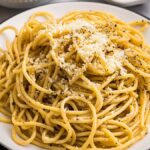
Cacio e Pepe
Cacio e pepe is a distinctive Italian recipe made with spaghetti, pecorino romano, butter, and black pepper. It's simple but so flavorful. You're in store for a real treat when you make this!
Servings: 2 to 3
Equipment
- Pot Medium
- Skillet Large
- Cheese Grater or Microplane Grater
Ingredients
- 8 Ounces spaghetti dried, uncooked
- 3 Tablespoons unsalted butter cut into cubes
- 1 Teaspoon black pepper freshly ground
- ¼ Cup pecorino romano cheese freshly grated
- salt as needed
Instructions
- Cook the pasta in salted water for 8 minutes or until al dente. Around the 8-minute mark, remove the pot from the stove but do not drain it, leaving the pasta in the pot of water.
- Set the cooked pasta in water near or next to the skillet. Reserve about ½ cup of the pasta water before draining the spaghetti.
- In a large nonstick skillet, melt the butter over a medium heat, add the freshly ground black pepper, and cook for about 1 minute until fragrant. Turn off the heat.
- Using a pasta fork, start to add the cooked pasta to the skillet, twirling it with the butter and pepper. Turn the heat back on to low and add ¼ cup of the pasta water.
- Add the cheese and stir with a pasta fork or tongs, adding some more of the reserved pasta water a little at a time if needed to form a creamy sauce thick enough to coat the spaghetti.
- Serve immediately with extra cheese and fresh ground pepper.
Notes
Dried spaghetti is best: I recommend dried pasta instead of fresh pasta, as it has a better texture for cacio e pepe and it has more of a "bite".
Use a microplane: A microplane grater is perfect for finely grated cheese. The cheese melts faster and doesn't clump like shredded or thickly grated cheese would.
Don't skip toasting the pepper: This boosts the flavor, adding more complexity to the flavor of the dish.
Use the skillet: The reason for finishing the dish in a skillet, not in the pasta cooking pan, is residual heat from the pasta pot can cause cheese clumping, which you don't want in your classic Roman pasta dish.
Use a microplane: A microplane grater is perfect for finely grated cheese. The cheese melts faster and doesn't clump like shredded or thickly grated cheese would.
Don't skip toasting the pepper: This boosts the flavor, adding more complexity to the flavor of the dish.
Use the skillet: The reason for finishing the dish in a skillet, not in the pasta cooking pan, is residual heat from the pasta pot can cause cheese clumping, which you don't want in your classic Roman pasta dish.
Nutrition
Calories: 622kcal | Carbohydrates: 86g | Protein: 19g | Fat: 22g | Saturated Fat: 13g | Polyunsaturated Fat: 1g | Monounsaturated Fat: 6g | Trans Fat: 1g | Cholesterol: 58mg | Sodium: 159mg | Potassium: 282mg | Fiber: 4g | Sugar: 3g | Vitamin A: 582IU | Calcium: 166mg | Iron: 2mg
QR code
Scan this QR code with your phone's camera to view this recipe on your mobile device.
