This post may contain affiliate links, please see the privacy policy for details.
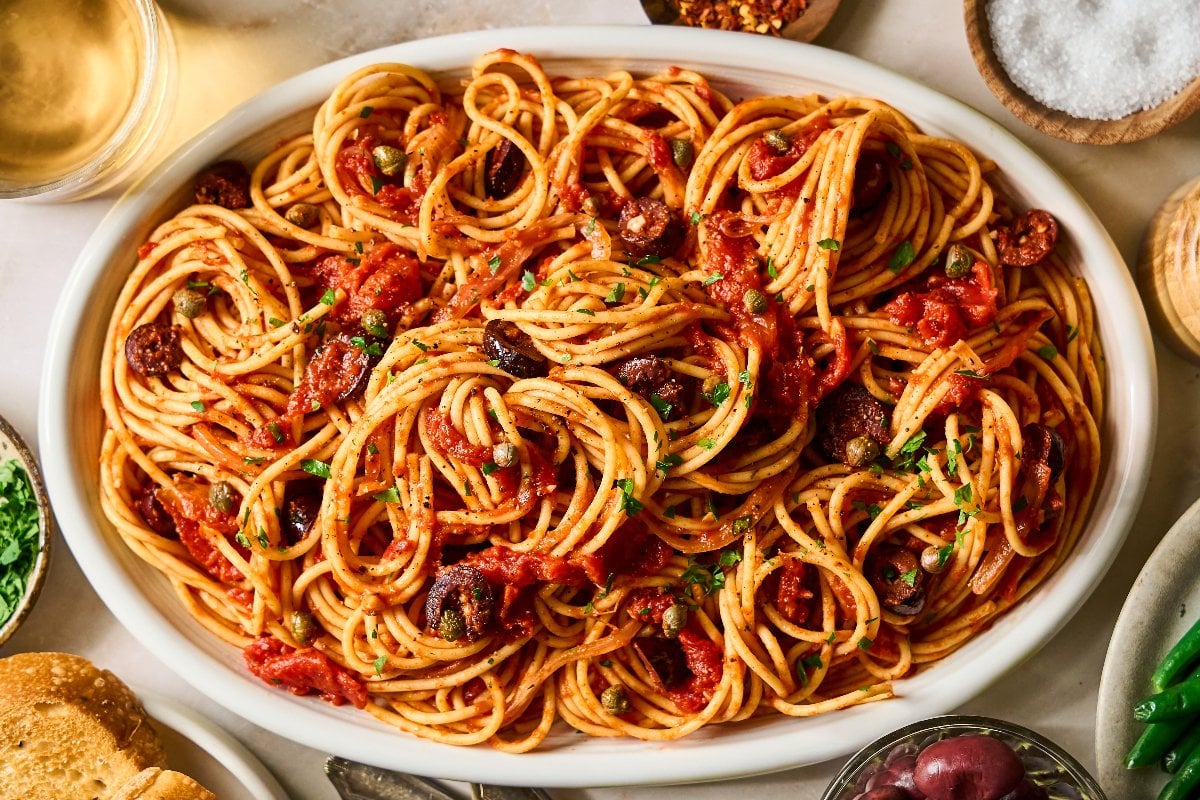
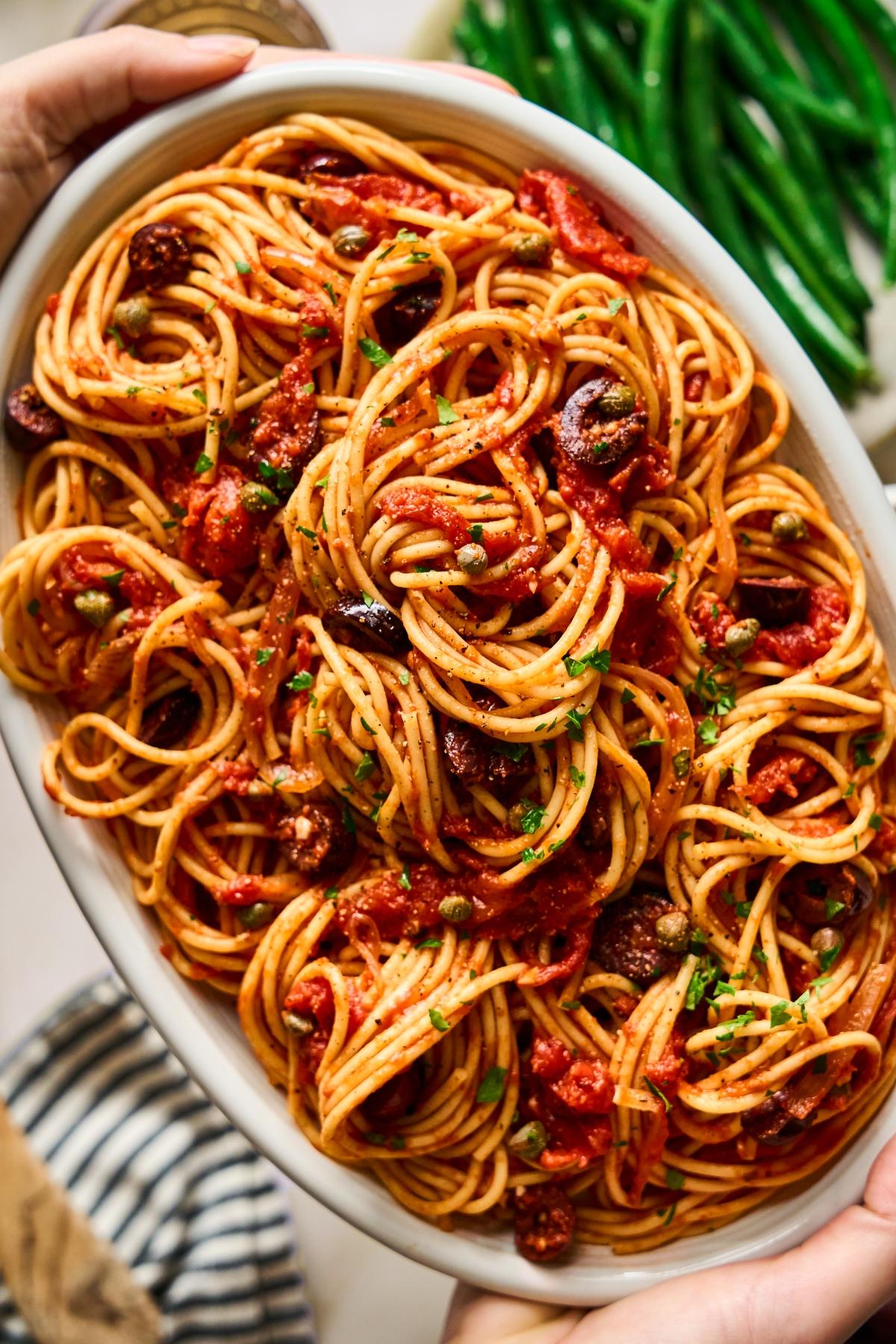
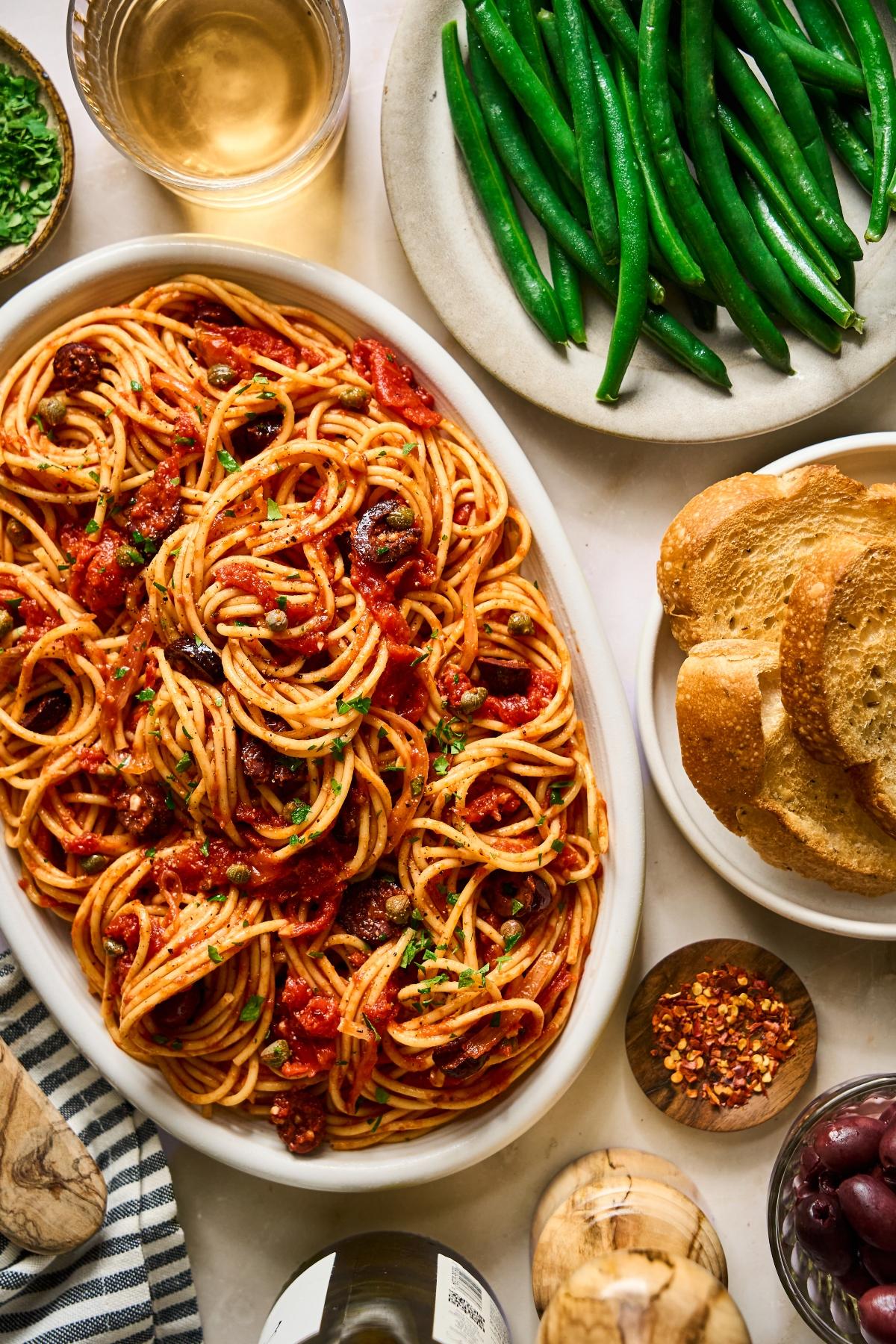
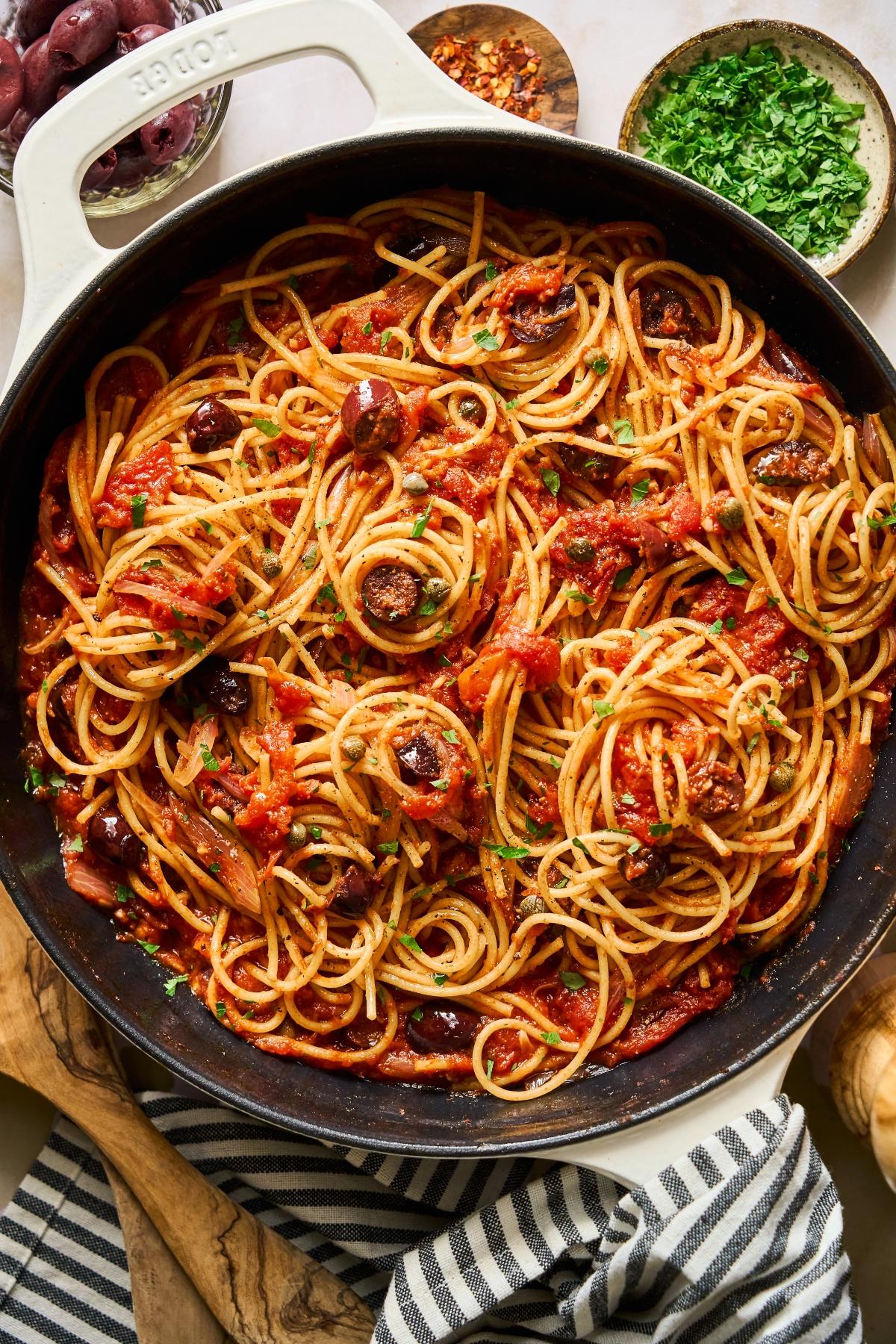
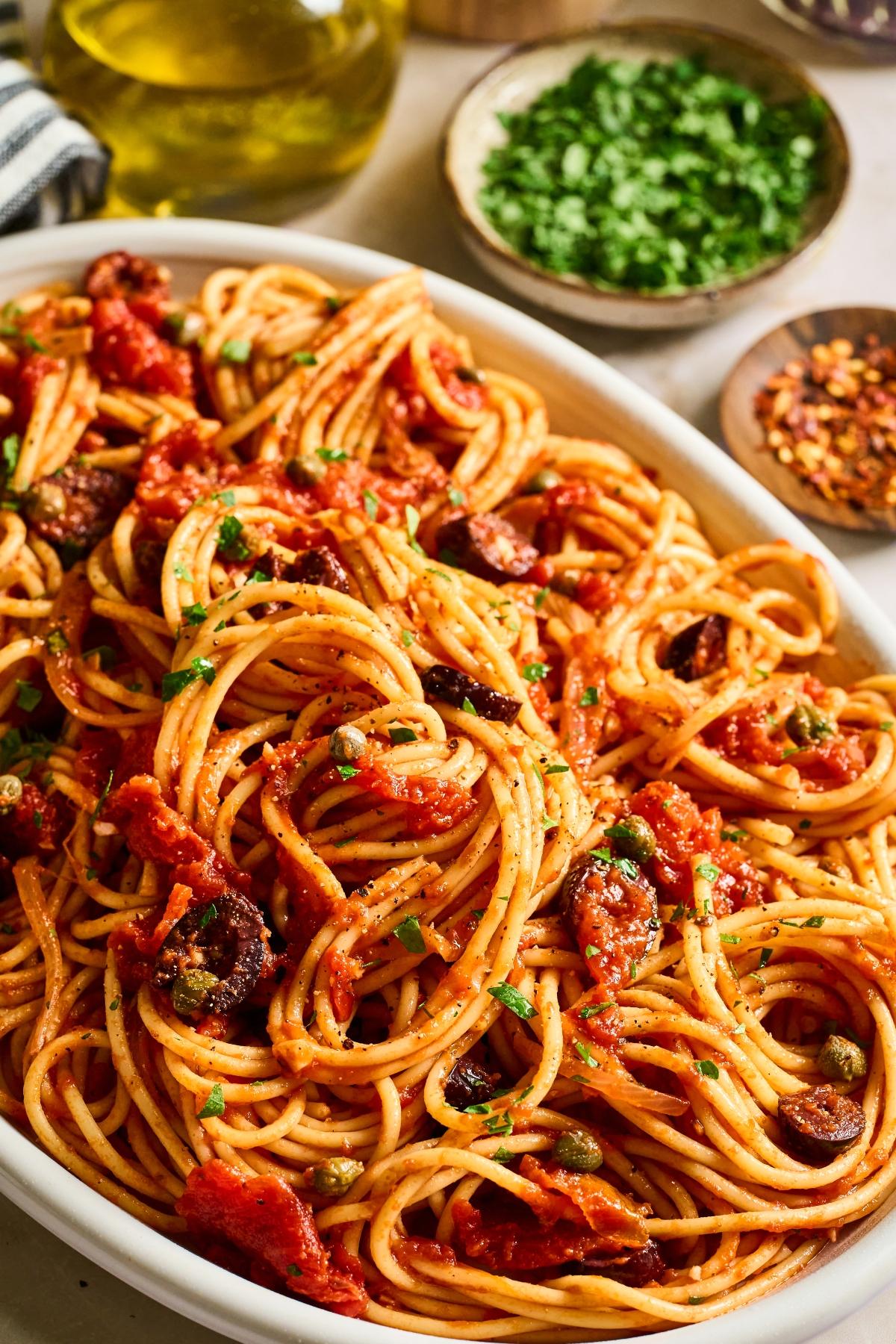
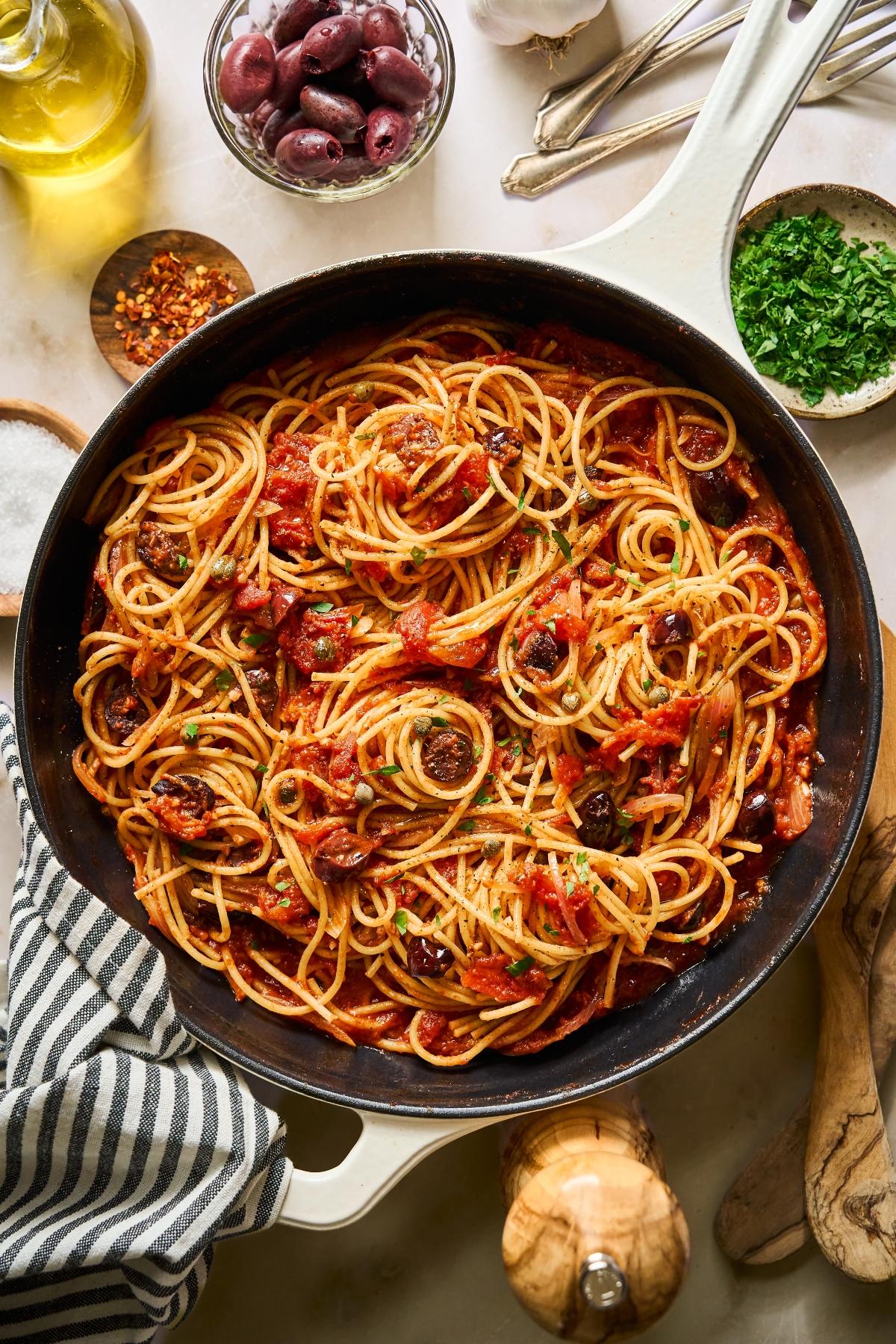
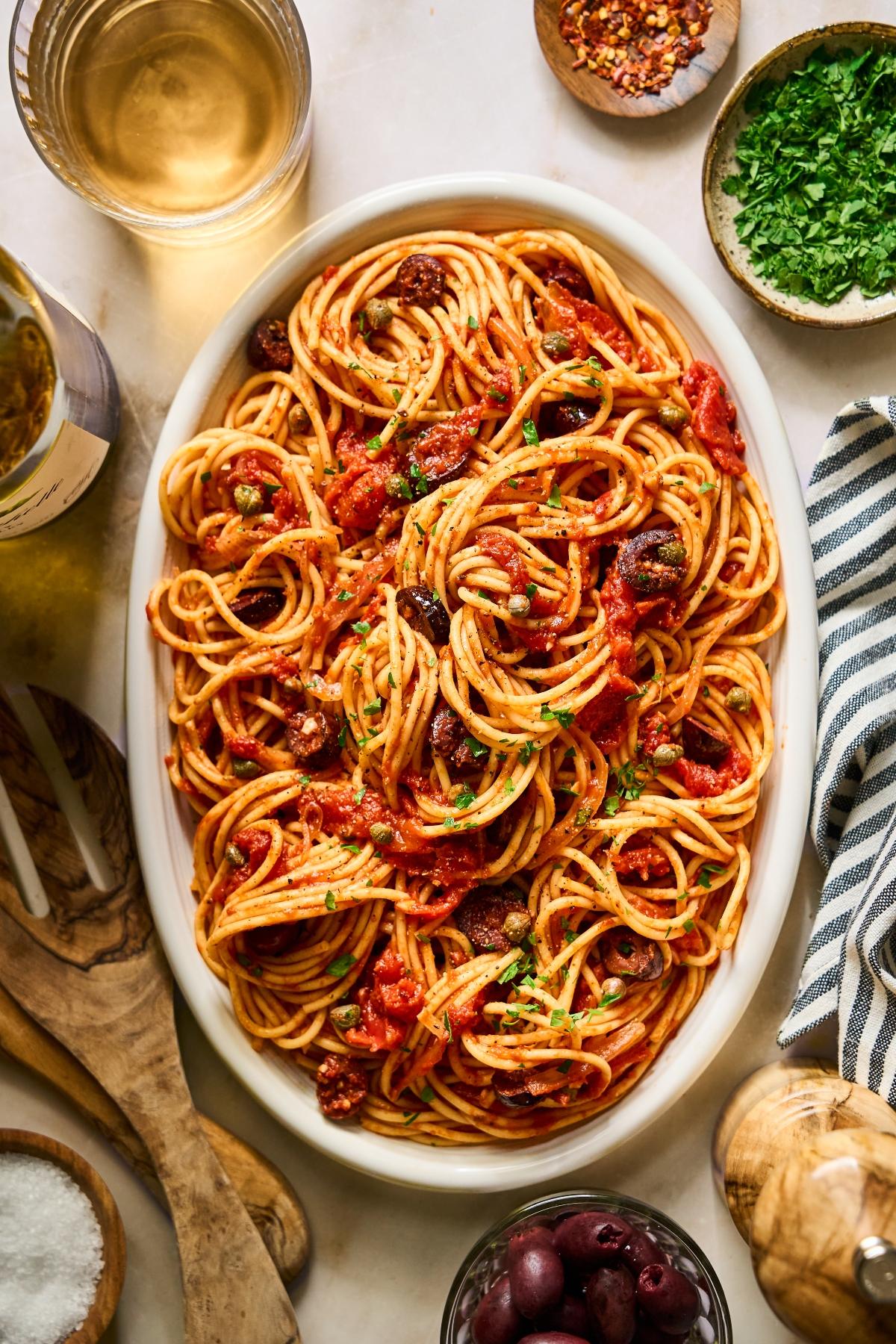
Pasta puttanesca brings together a garlicky tomato sauce with anchovies, olives and capers for a punchy, full-bodied meal. The sauce cooks quickly but tastes like it’s been simmering all afternoon thanks to the depth from the anchovies and brine. It’s rustic, fragrant and built from simple pantry ingredients that deliver big flavor without extra effort. Serve this classic pasta dish hot with a sprinkle of parsley on top and some crusty bread to soak up the mouthwatering puttanesca sauce.
Why You’ll Love It

Pasta puttanesca is a classic Italian dish that’s prepared with garlic, San Marzano tomatoes, olives and capers, simmered together into a bold, briny sauce.
Rich taste: Anchovies melt into the sauce for deep flavor.
Flexible spice level: Adjust the red pepper to your liking.
Pantry-friendly: Uses ingredients you likely already have.
Restaurant-worthy: Easy to make yet full of character.
Also try pasta e patate, lasagna alla Bolognese, pasta alla norcina, pasta alla nerano, chicken puttanesca, easy stracciatella soup and eggplant rollatini.
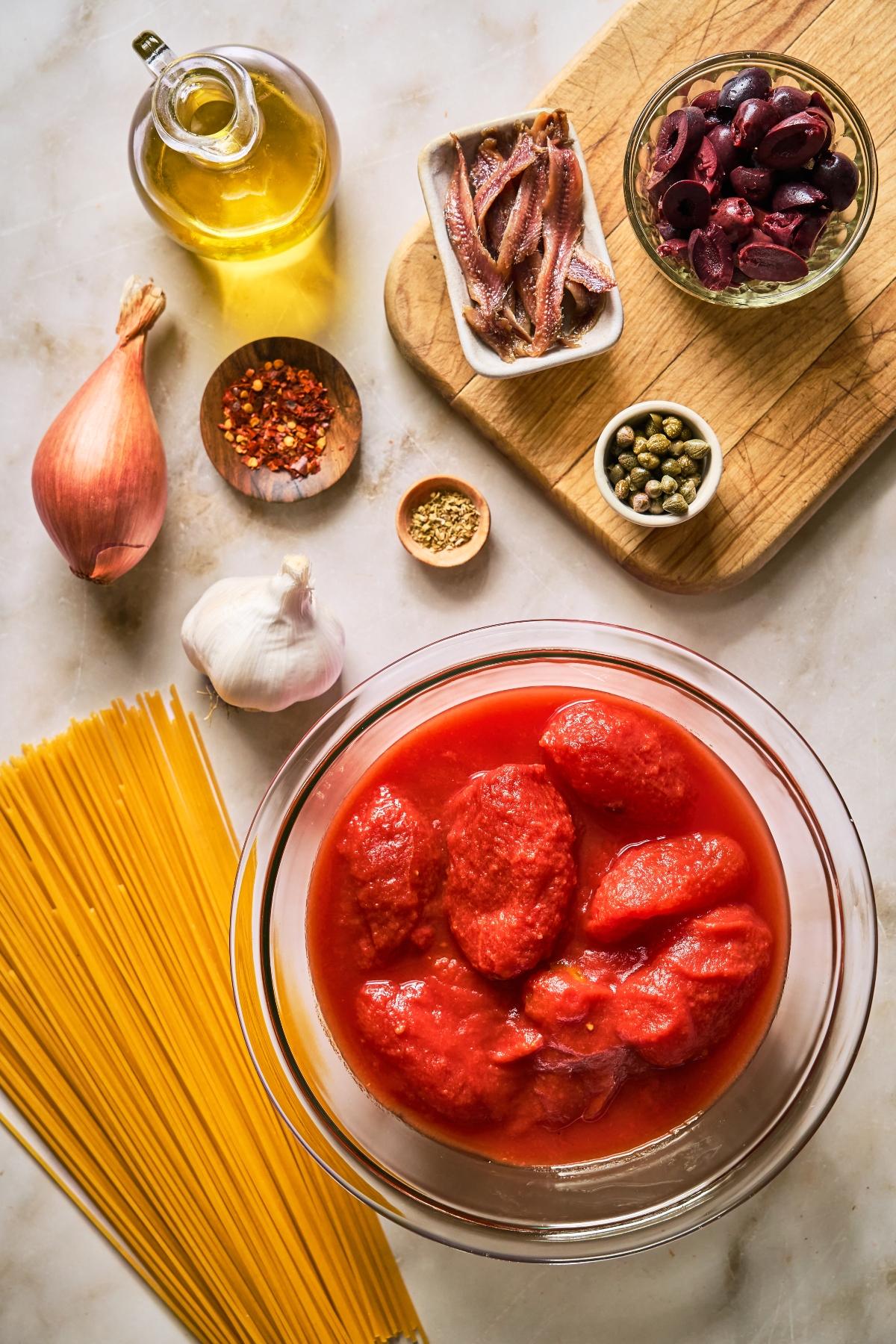
Spaghetti Puttanesca Ingredients
A complete list of ingredients and amounts can be found in the recipe card below.
San Marzano-style tomatoes: Crushed for a chunky, flavorful sauce. San Marzano-style tomatoes bring natural sweetness and balanced acidity, which makes the sauce rich instead of sharp. If you can’t find this variety of peeled tomatoes, use another high-quality canned whole tomato; avoid crushed tomatoes since they cook thinner.
Extra virgin olive oil: Builds the base and enhances every layer of taste. The generous amount of oil carries the anchovy and garlic flavors through the sauce. If you’re out, you can use regular olive oil, but skip neutral oil as this dish relies on olive oil’s flavor.
Shallot: Adds gentle sweetness and depth.
Garlic: Brings a strong aromatic backbone. Garlic is central to the sauce’s backbone; freshly minced garlic blooms better than jarred. If replacing, use garlic paste before reaching for pre-minced jarred garlic.
Dried oregano: Adds herbal warmth to the sauce. Dried oregano adds herbaceous savoriness that supports the briny notes. If you run out, dried thyme works nicely or skip it altogether rather than using Italian seasoning.
Red pepper flakes: Bring subtle heat. A pinch adds gentle warmth without overpowering. Aleppo pepper is a great alternative for a more rounded heat; paprika doesn’t behave the same here.
Capers: Add salty, tangy brightness. Non-pareil capers are smaller and more delicate. If you can’t find them, use standard-sized capers.
Kalamata olives: Give richness and briny balance. Their meaty texture adds body and salty tang. Castelvetrano olives give a softer, buttery vibe if preferred. I used these!
Anchovies: Create a savory depth that defines the dish. The anchovies melt into the sauce and add savoriness without adding an overly “fishy” taste.
Spaghetti or bucatini: Perfect shapes to hold the pasta sauce.
Fresh parsley: Optional garnish for a fresh finish.
How to Make Spaghetti alla Puttanesca
For more detailed instructions with weights and measurements, jump to the printable recipe card.
Start the sauce: Warm olive oil in a skillet and sauté shallot until soft. Add and cook garlic, oregano, anchovies, capers and olives, stirring as the anchovies melt.
Add San Marzano tomatoes: Stir in crushed canned tomatoes with salt and pepper. Let the sauce simmer until slightly thickened, stirring occasionally.
Cook pasta: Boil pasta in salted water in a large pot until al dente. Save a little of the cooking water then drain pasta.
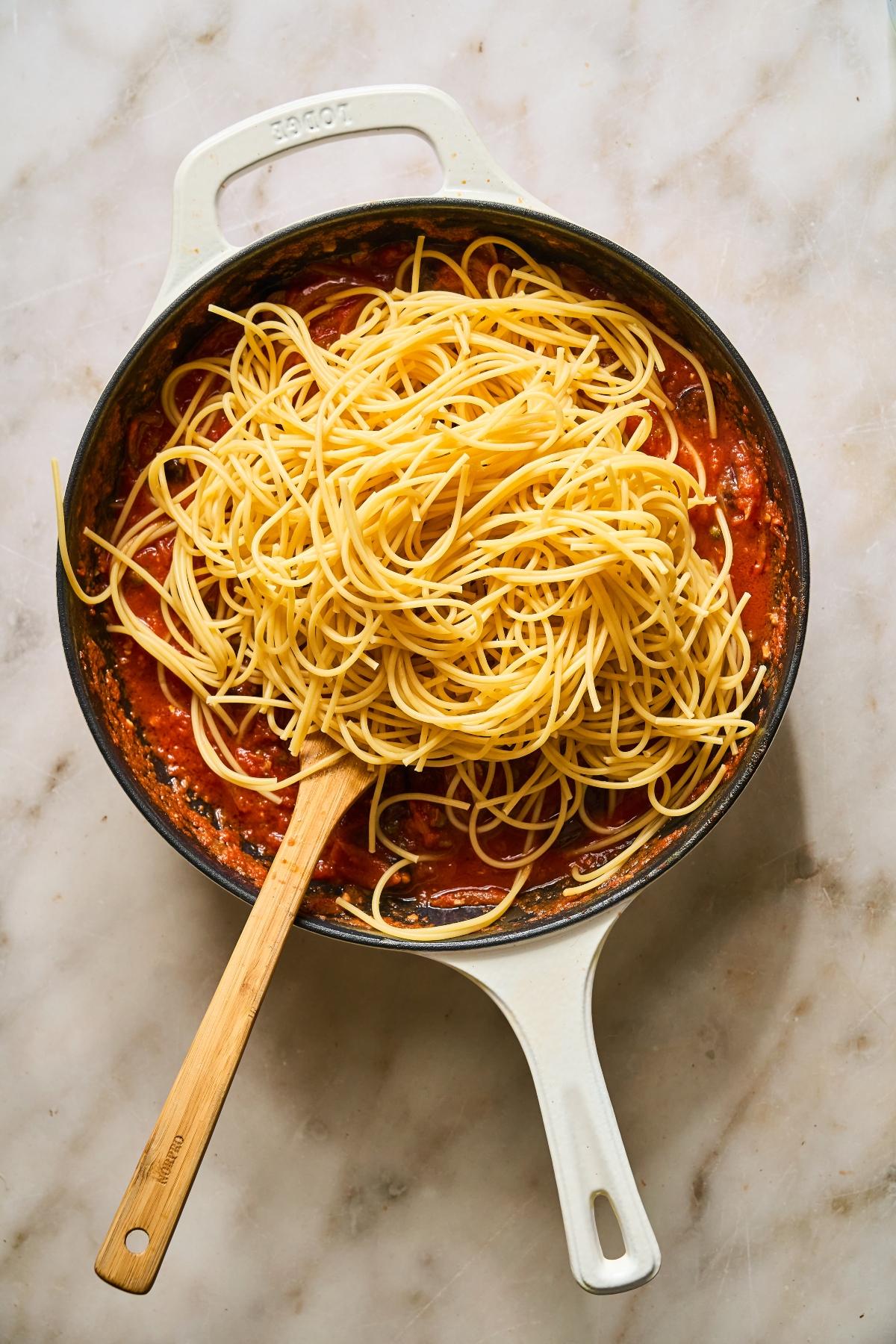
Combine: Toss pasta with the puttanesca sauce, adding splashes of pasta water until it clings smoothly to the noodles.
Finish: Top with parsley and serve right away.
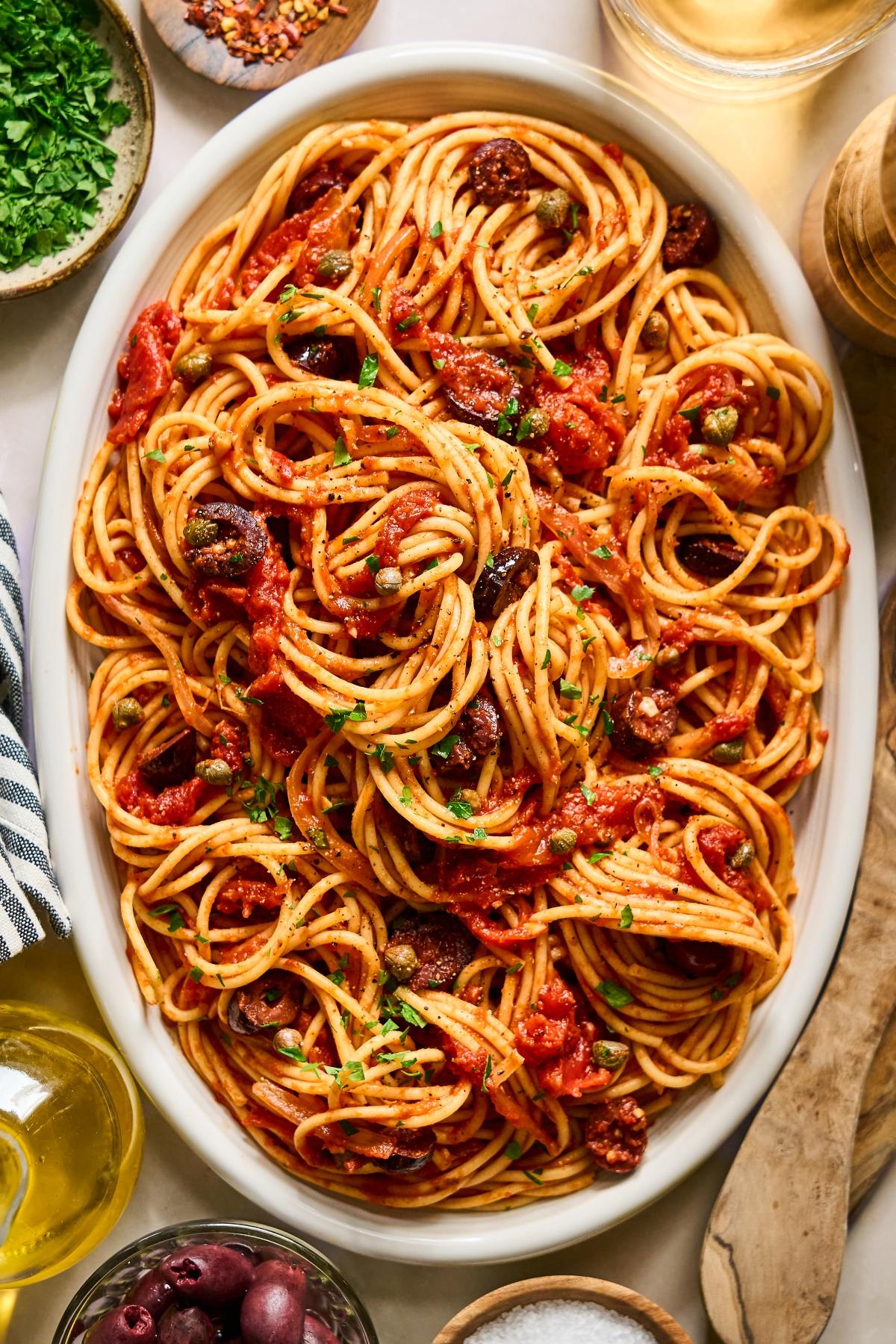
Substitutions and Variations
Pasta types: Linguine, bucatini or spaghetti all work well.
Gluten-free version: Use your favorite gluten-free pasta.
Anchovy swap: Try anchovy paste or chopped sardines for a similar effect.
Heat adjustment: Use more or less red pepper to match your spice level.
Olive options: Castelvetrano olives give a softer, buttery touch.
Shallot alternative: Use half a small yellow onion, minced, instead.
Garnish: A small sprinkle of fresh parsley adds freshness without distracting from the sauce’s character. Lemon zest works well too, or you might prefer fresh basil.
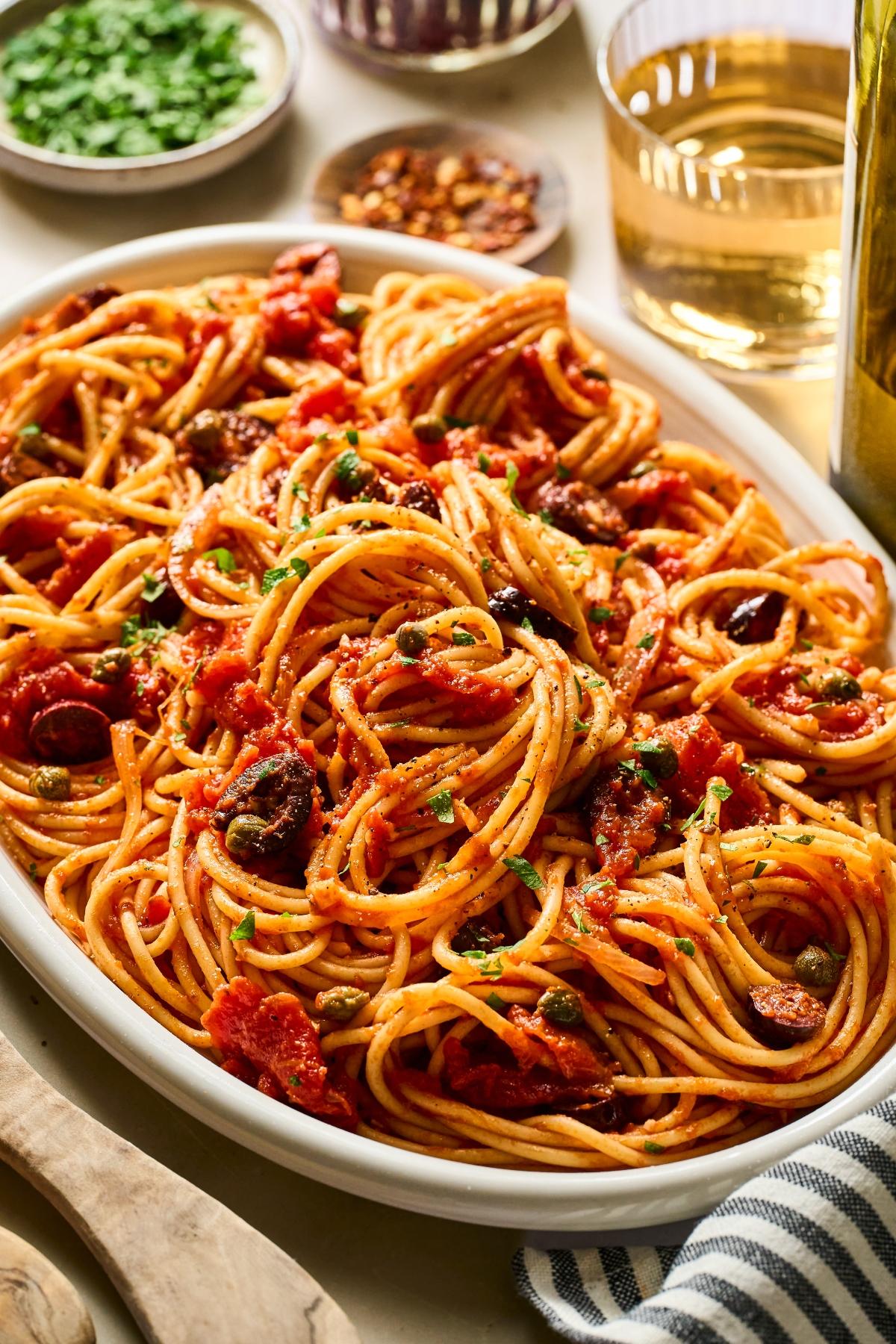
Serving Suggestions
With bread: Enjoy this pasta dish with air fryer garlic bread or some mushroom focaccia.
With a salad: This Italian chopped salad would make a tasty side dish.
With vegetables: Garlic green beans are tasty on the side or perhaps you’d prefer some smoked asparagus.
How to Store
Store: Keep leftover sauce in the fridge up to 4 days. This dish doesn’t keep well once mixed. The pasta will soften and lose its texture after storing. If planning ahead, make the sauce and divide into portions; then cook fresh pasta as needed and finish the recipe from that point.
Freeze: Freeze sauce (without pasta) for 2 months.
Thaw: Defrost in the fridge and reheat gently on the stove.
Reheat: Toss warm sauce with freshly cooked pasta before serving.
Top Tips
Don’t skip the anchovies: They dissolve completely and add savory depth.
Add spice gradually: Red pepper strength varies by brand.
Simmer to concentrate: I find 10 to 12 minutes is enough to tighten the sauce and deepens complexity. Too fast and the sauce stays sharp; too long and it thickens too much. Aim for glossy and spoon-coating.
Cook pasta in salted water: It enhances flavor from the inside. Keep a little of the starchy pasta cooking water in case you need to thin the sauce later.
Thinning the sauce: Add the reserved pasta water gradually if using. You may not need any pasta water. If your sauce has reduced too much, add a quarter cup at a time until the sauce reaches your preferred consistency.
Finish in the sauce: Tossing pasta in the skillet helps everything blend.
Pasta Puttanesca FAQs
“Puttanesca” translates roughly to “in the style of the ladies of the night.” The name is said to come from the quick, bold nature of the dish, something that could be prepared fast between customers or after long hours. It’s a saucy, vibrant pasta built from pantry staples like anchovies, olives and capers that reflect its lively and daring character!
You can, but they’re what give puttanesca its signature character.
Traditionally it’s served without, though a light sprinkle of Parmesan cheese on top is fine. Without the Parmesan, this is a non-dairy dish.
Pasta Puttanesca Recipe
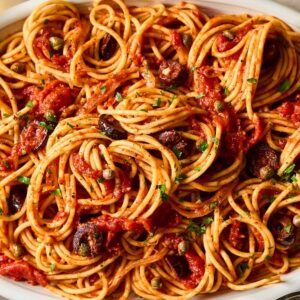
Pasta Puttanesca
Equipment
Ingredients
- 28 Ounces San Marzano tomatoes, canned
- 4 Tablespoons extra virgin olive oil
- 1 shallot, thinly sliced
- 4 Cloves garlic, peeled and minced
- ¼ Teaspoon dried oregano
- 1 Pinch red pepper flakes
- 2 Tablespoons capers, non-pareil
- ½ Cup kalamata olives, pitted, roughly chopped
- 8 Filets anchovies, minced
- ½ Teaspoon sea salt
- ¼ Teaspoon black pepper, freshly ground
- 10 Ounces spaghetti, or other long pasta like bucatini or linguine
- fresh parsley, minced, for optional garnish
Instructions
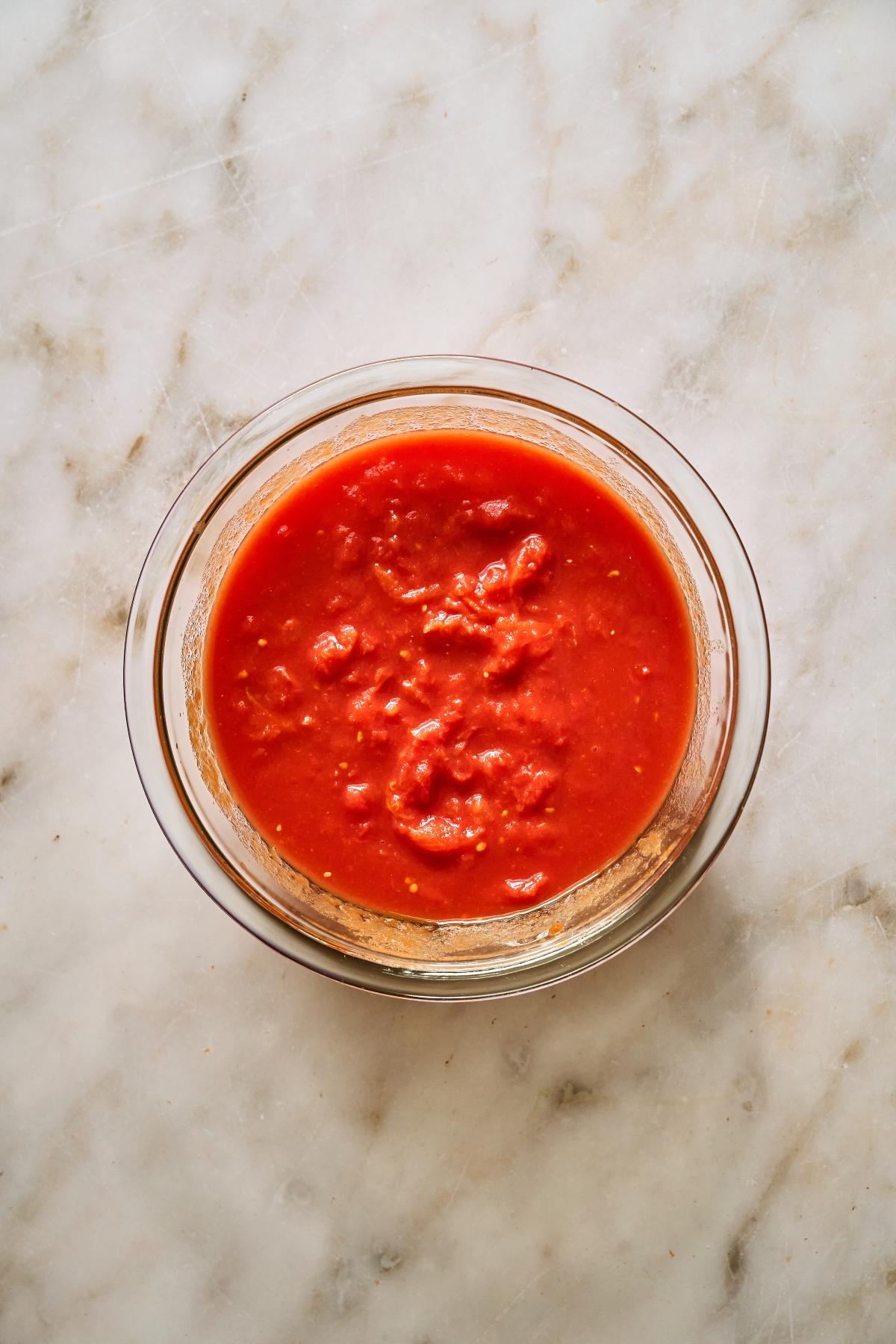
- Empty the canned tomatoes into a large bowl and crush into small pieces with your hands. Breaking tomatoes by hand keeps texture rustic and prevents over-processing, which can make them watery and metallic. Keep the tomatoes submerged in the liquid while squeezing so they burst into the bowl, not your kitchen. If you prefer a smoother sauce, pulse gently in a blender, but don’t overdo it.
- Set aside.
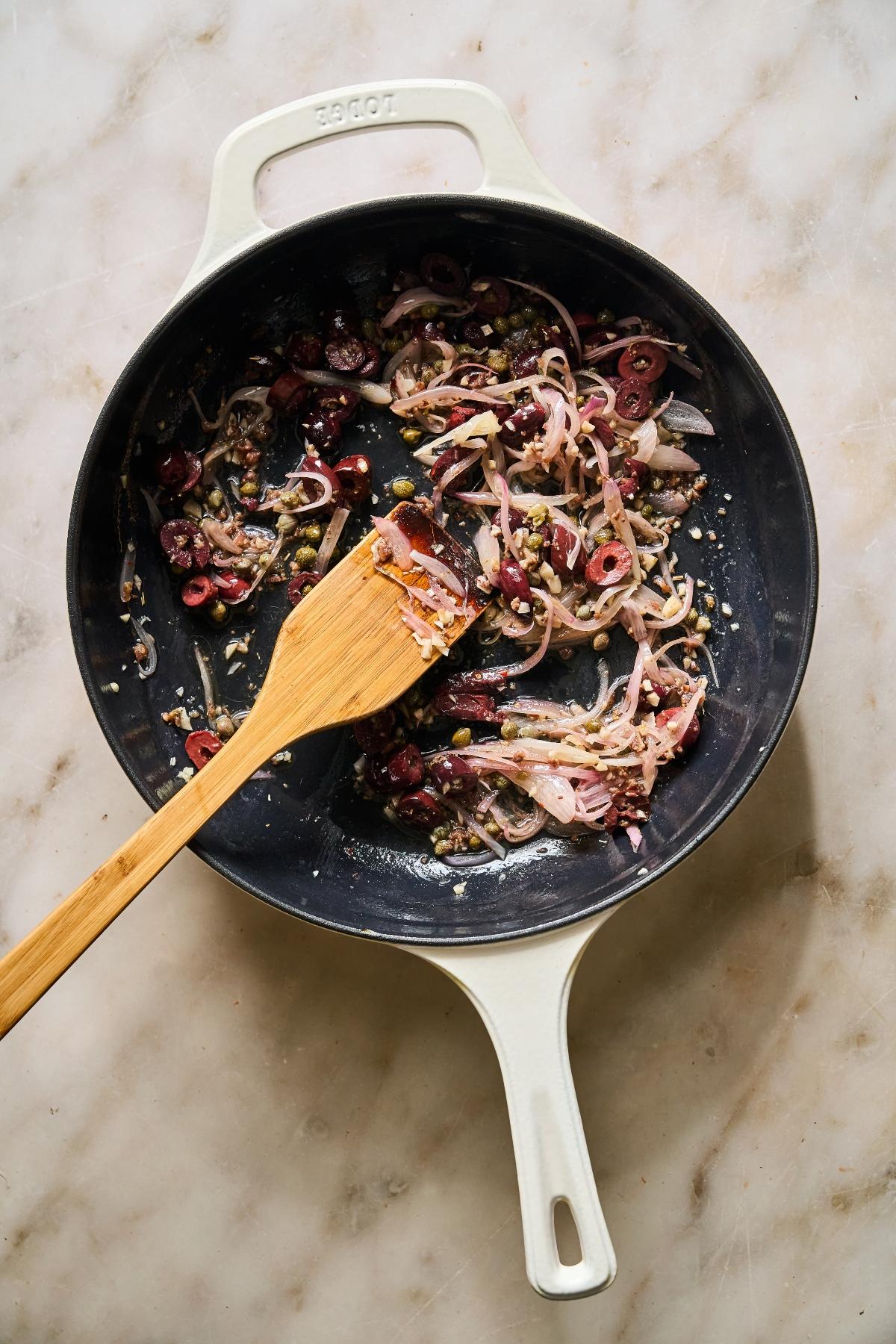
- Heat olive oil in a large skillet over medium heat. Add the shallot and sauté for 2 to 3 minutes until softened.
- Add the garlic, oregano, red pepper flakes, capers, olives, and anchovies.
- Sauté 2 to 3 minutes to allow the flavors to develop. Let the anchovies melt into the warm oil; they disappear and leave umami behind. If you’re nervous about a fishy flavor, cook 15 to 30 seconds longer until they fully dissolve.
- Add the crushed tomatoes, salt and pepper.
- Stir well and simmer for 10 to 12 minutes until lightly thickened.
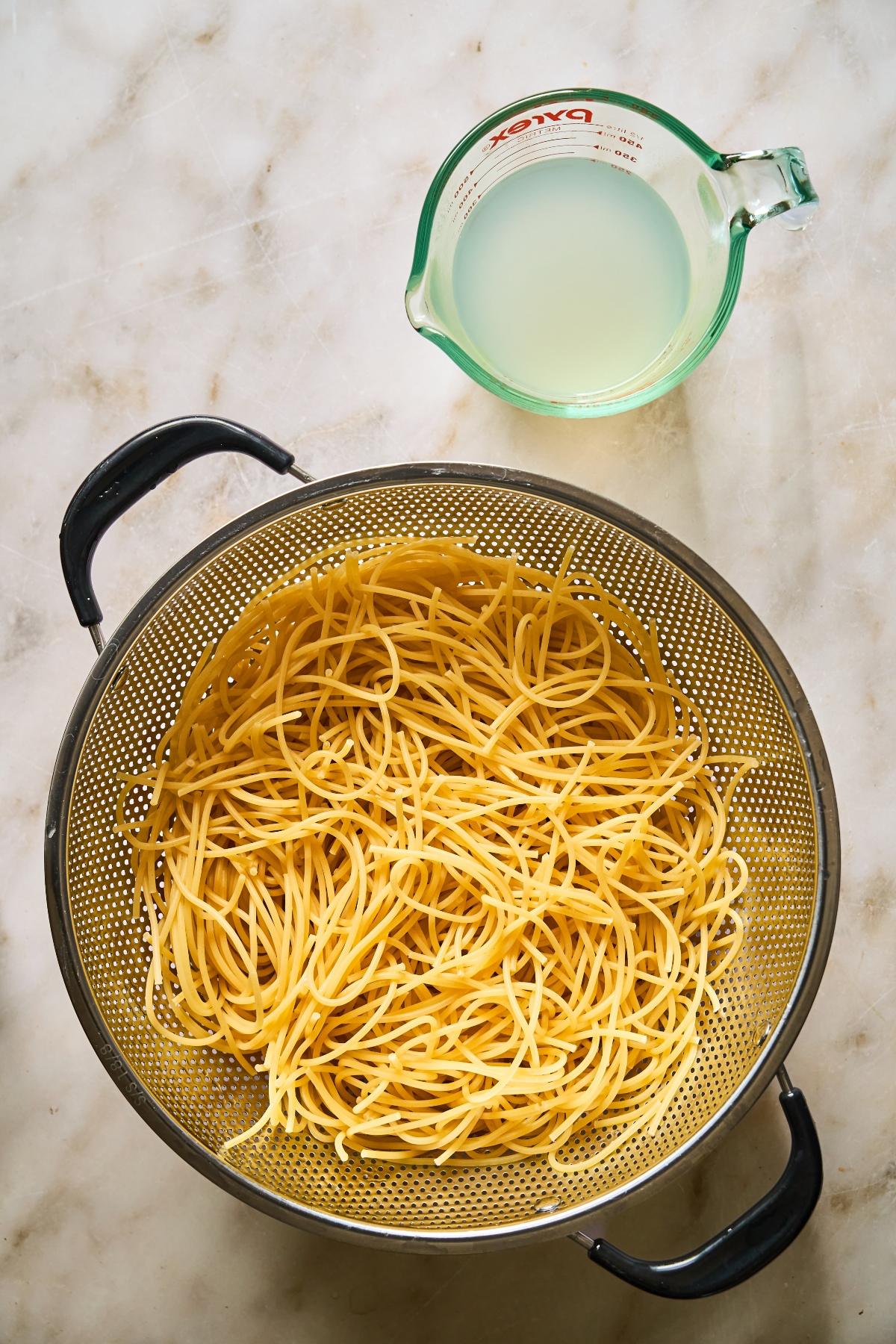
- Meanwhile, cook pasta in salted water according to package directions until just shy of al dente.
- Reserve 1 cup pasta water, then drain.
- Add the pasta to the sauce and toss well to coat.
- Cook over low heat, tossing frequently, until pasta is well coated in sauce.
- Add reserved pasta water as needed.
- Serve garnished with parsley if liked.
Notes
Add spice gradually: Red pepper strength varies by brand.
Simmer to concentrate: I find 10 to 12 minutes is enough to tighten the sauce and deepens complexity. Too fast and the sauce stays sharp; too long and it thickens too much. Aim for glossy and spoon-coating.
Cook pasta in salted water: It enhances flavor from the inside. Keep a little of the starchy pasta cooking water in case you need to thin the sauce later.
Thinning the sauce: Add the reserved pasta water gradually if using. You may not need any pasta water. If your sauce has reduced too much, add a quarter cup at a time until the sauce reaches your preferred consistency.
Finish in the sauce: Tossing pasta in the skillet helps everything blend.
Nutrition
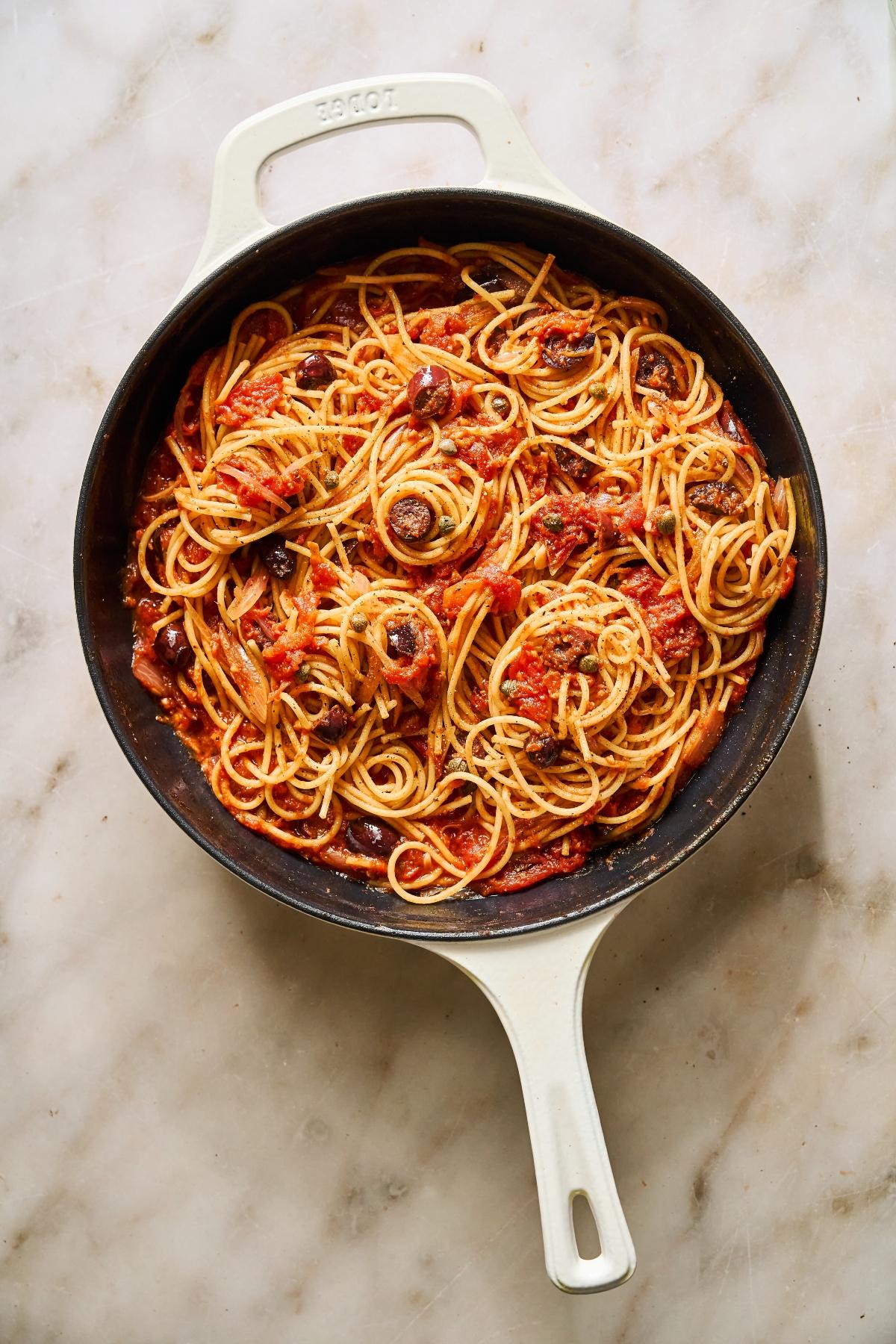
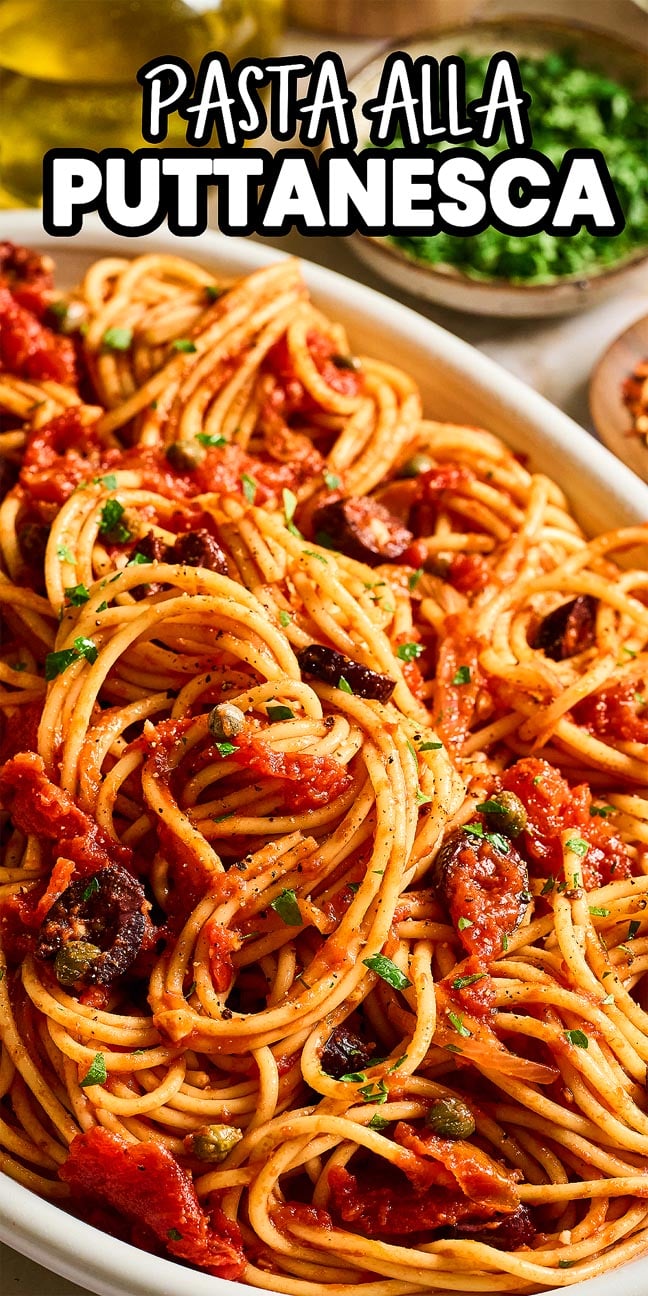
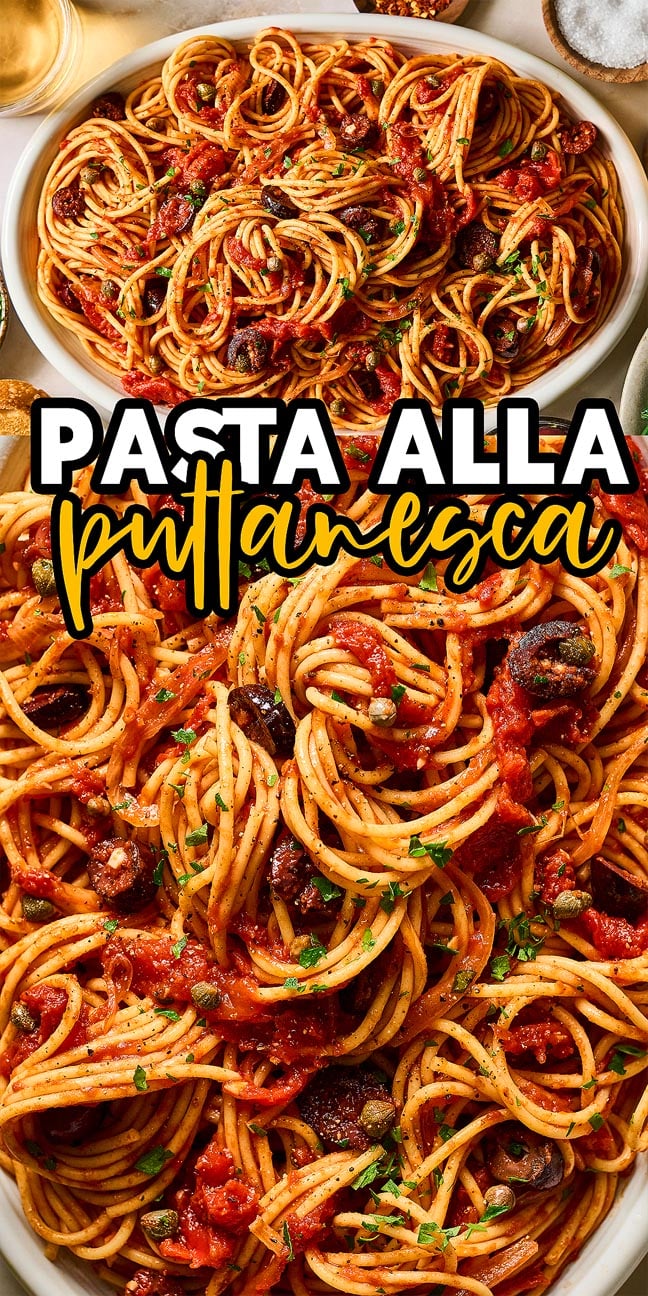
Pasta puttanesca proves how simple ingredients can create big flavor. The sauce is garlicky, savory and just the right amount of spicy, coating every strand of pasta in a glossy finish. It’s a weeknight dish with old-world charm, the kind that tastes like it came straight from an Italian kitchen even though it starts in yours.
Other Recipes to Try
Bella Bucchiotti
Bella Bucchiotti is a Canadian-based syndicated food, travel, and lifestyle writer, photographer, and creator at xoxoBella. She founded xoxoBella in 2015, where she shares her love for food, dogs, sustainability, fitness, crafts, outdoor adventures, travel, and philanthropy to encourage others to run the extra mile, try new recipes, visit unfamiliar places, and stand for a cause. Bella creates stress-free and family-friendly recipes for weeknight dinners and festive feasts.