This post may contain affiliate links, please see the privacy policy for details.
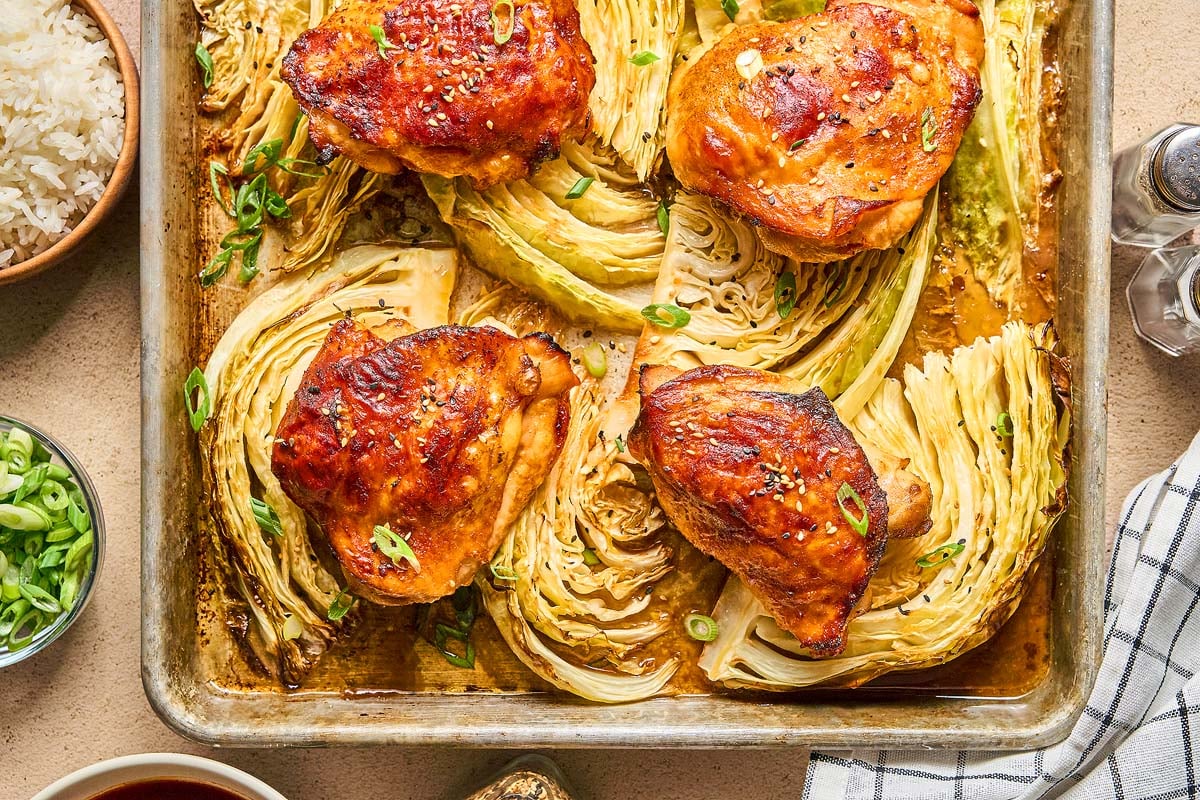
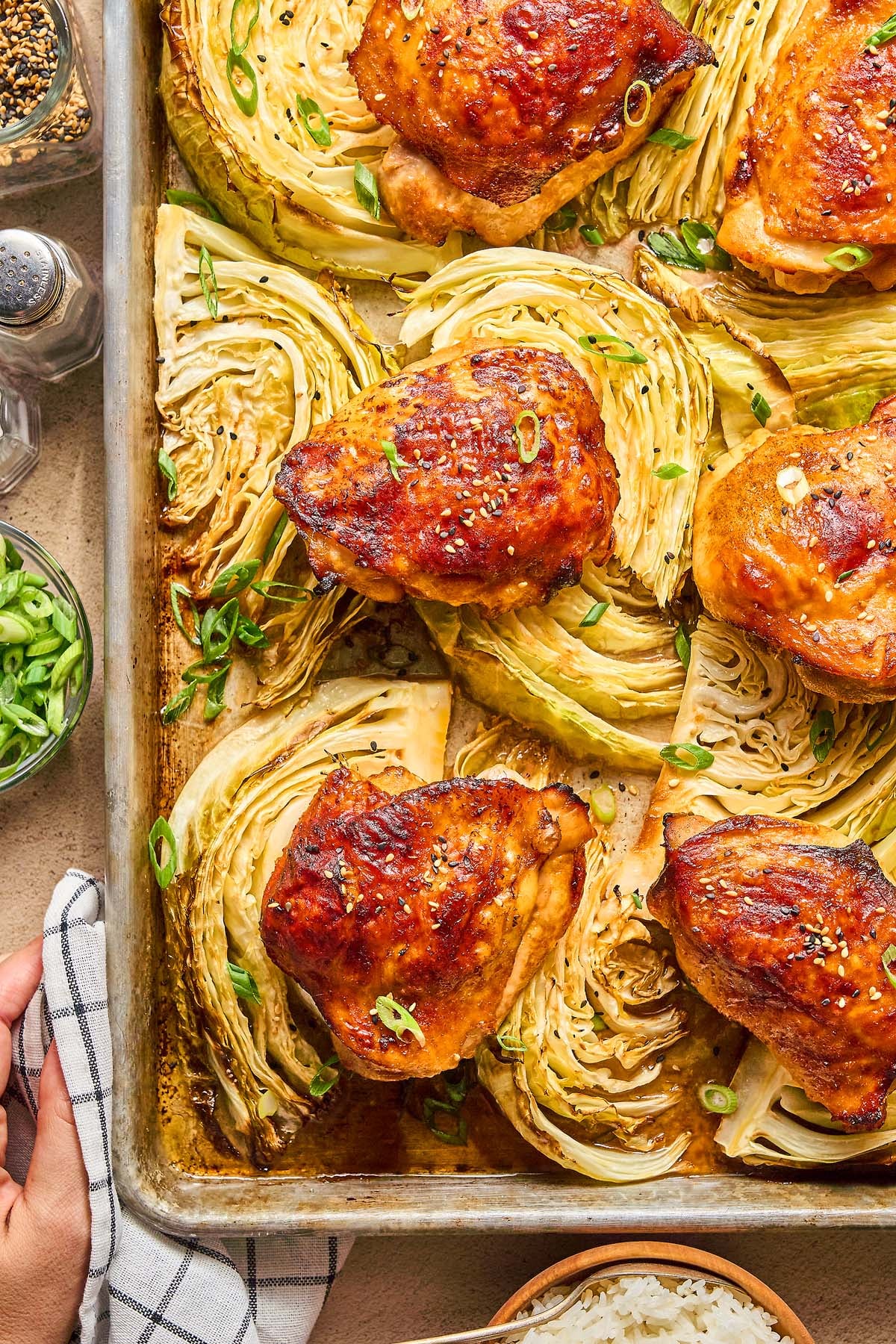
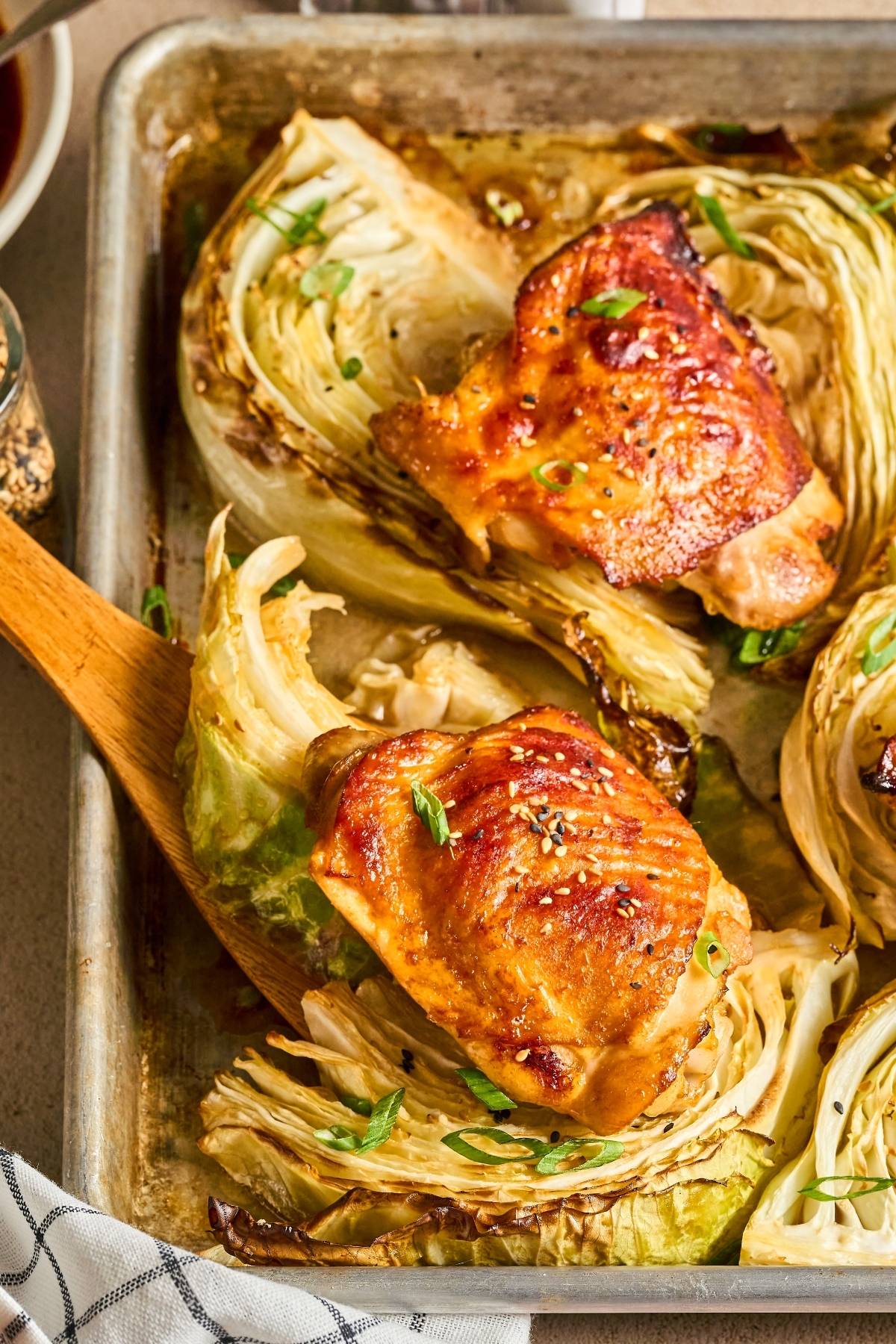
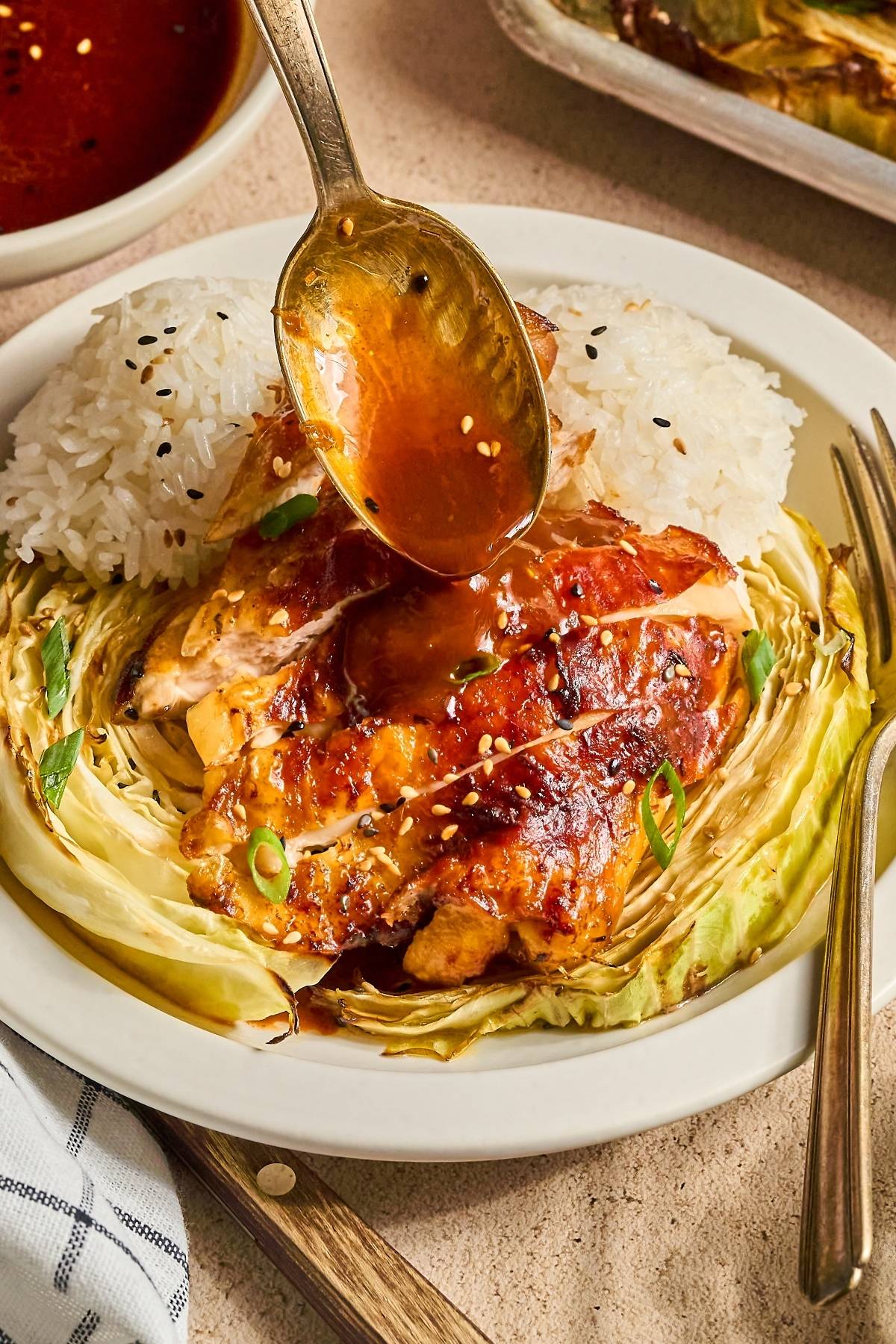
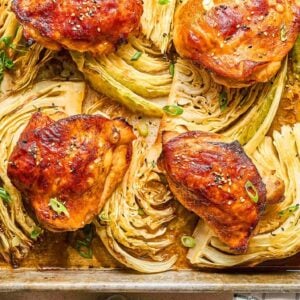
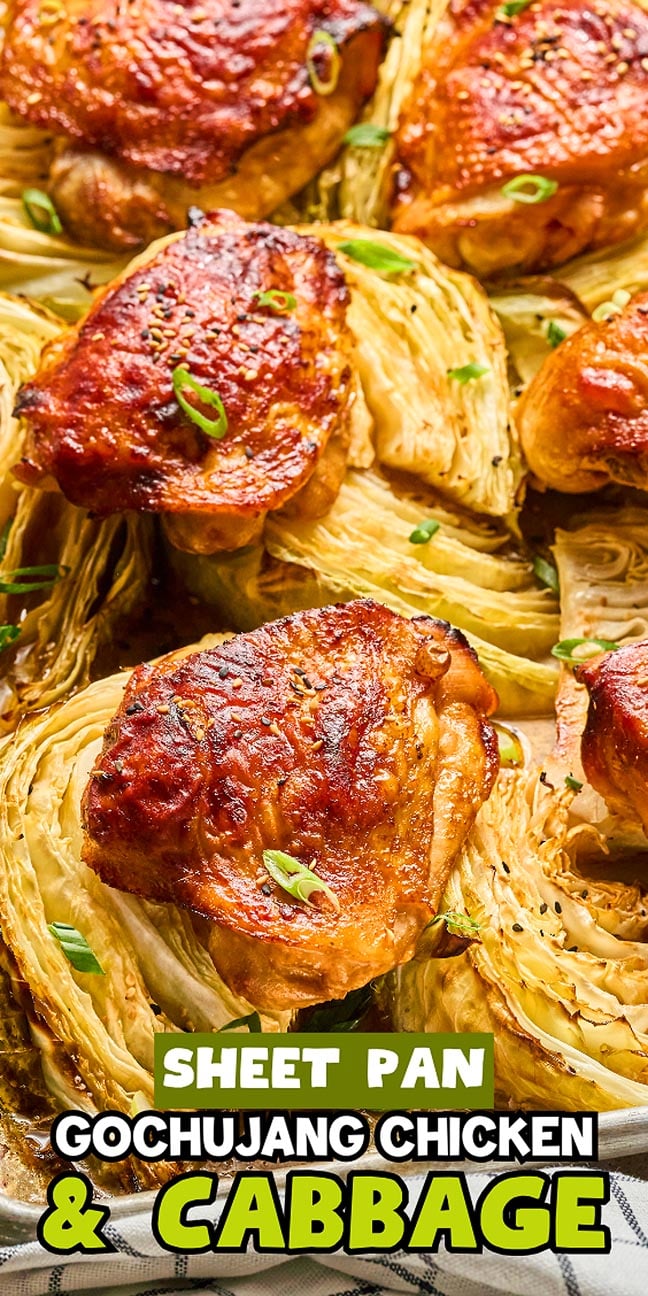
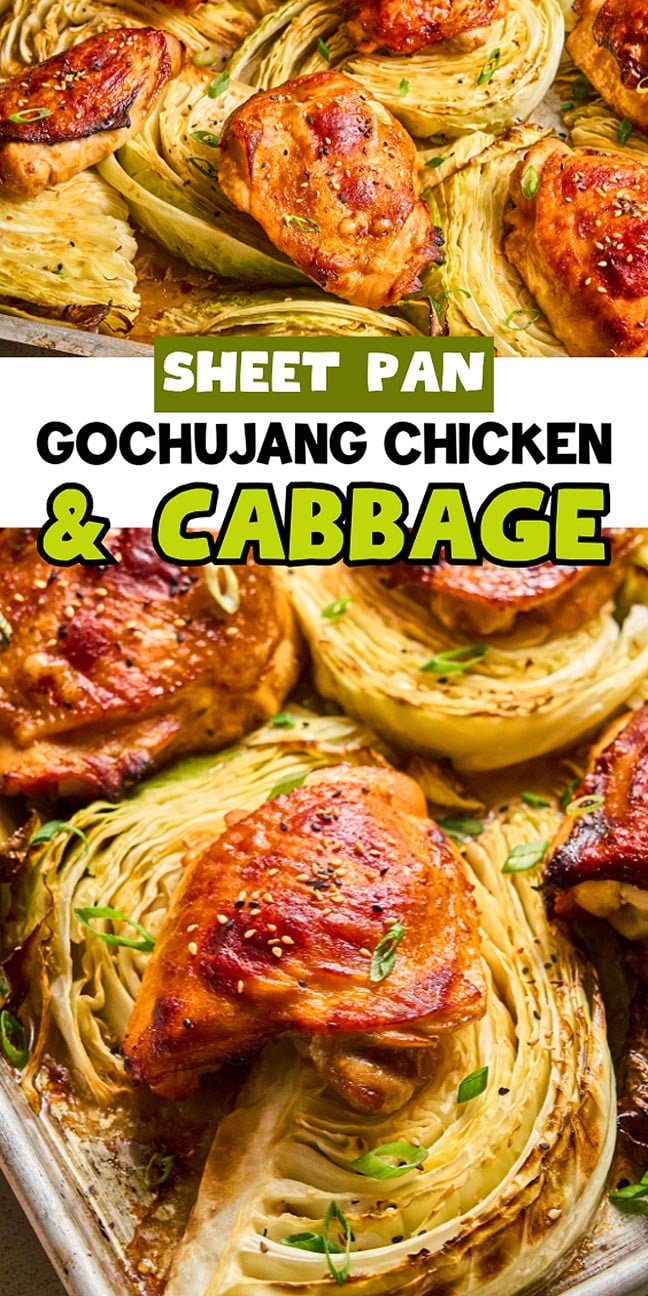
Sheet pan gochujang chicken and cabbage is the kind of meal that proves one pan is all you need for something vibrant and satisfying. The chicken roasts until the skin is crisp and the meat is juicy, while the cabbage underneath soaks up the savory, spicy glaze. The gochujang mixture adds deep heat and a touch of sweetness that caramelizes beautifully in the oven. It’s a simple, tasty and perfect dish for when you want a homemade dinner that doesn’t take all night to make.
Why You’ll Love It

Chicken thighs roast with cabbage in one pan until everything is golden and tender. The rich gochujang glaze ties it together with balanced heat, salt and sweetness.
Full flavor: Gochujang, soy sauce and sesame oil build deep, savory notes.
Low effort: Everything cooks on one pan with almost no cleanup.
Perfect texture: Crispy skin, soft cabbage and caramelized edges.
Balanced heat: Spicy without being overwhelming.
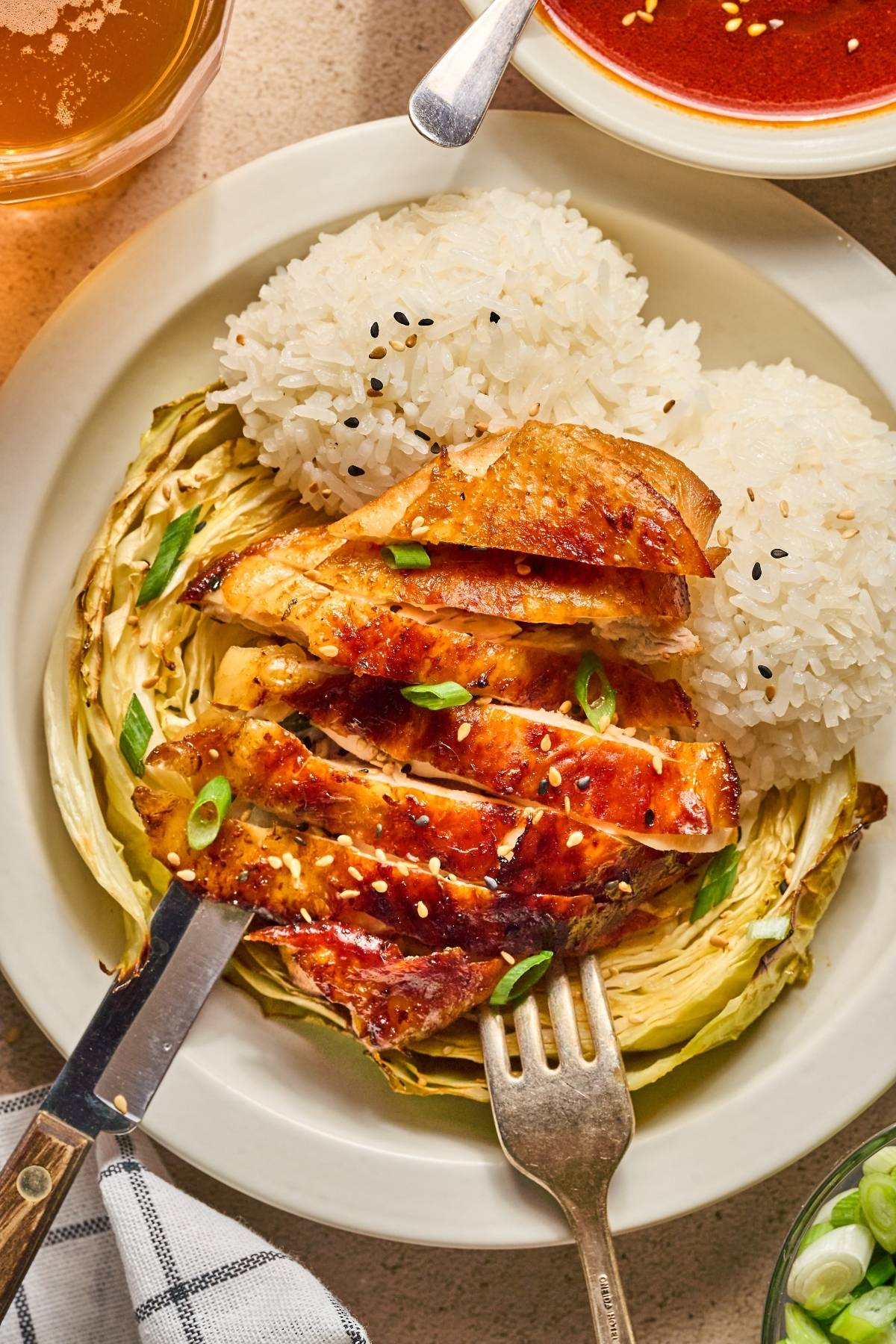
You might also like to try my spicy gochujang chicken stir fry, beef bulgogi bowls, unstuffed cabbage rolls, classic American chop suey and spicy chicken tenders.
Sheet Pan Gochujang Chicken Ingredients
A complete list of ingredients and amounts can be found in the recipe card below.
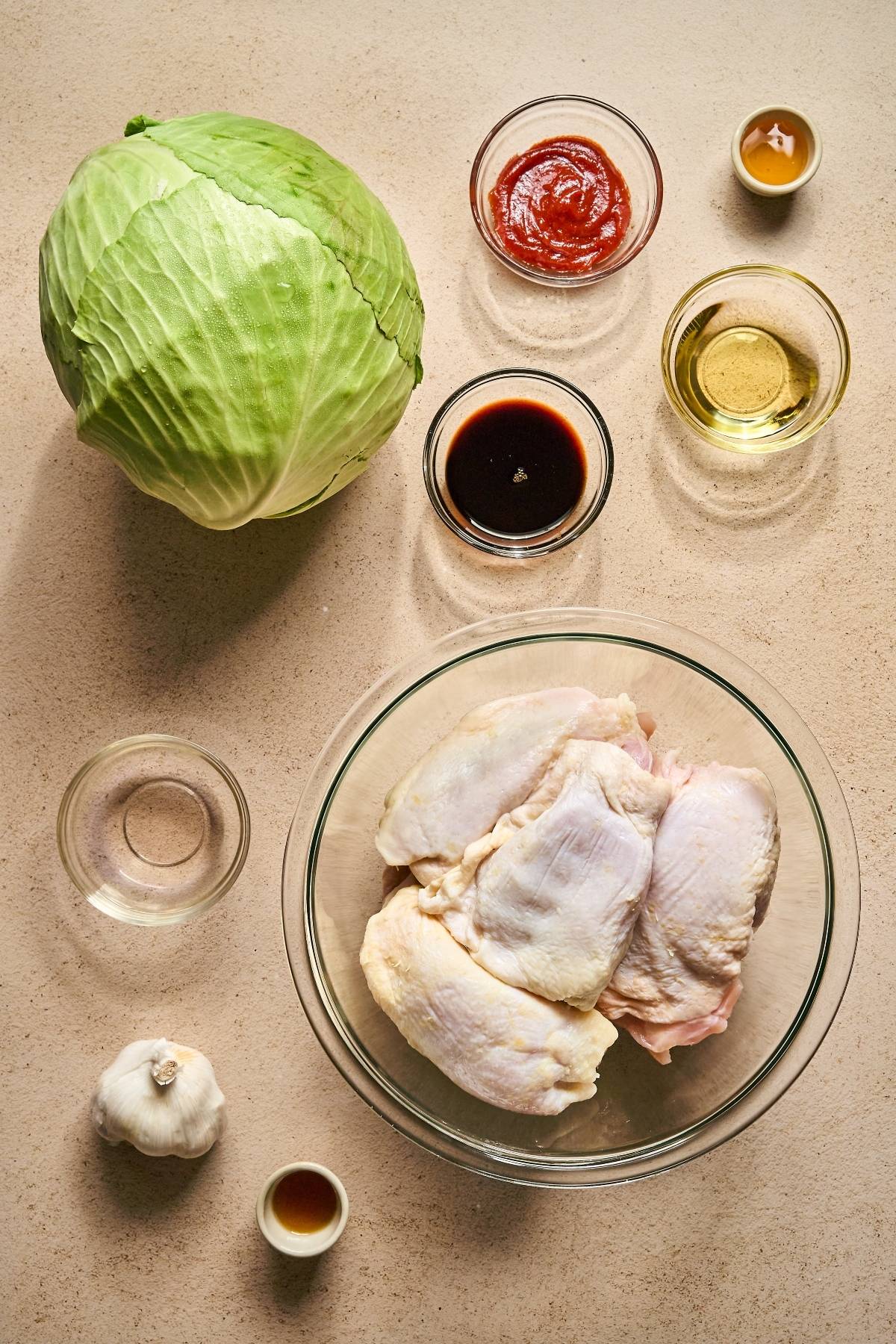
Chicken: Bone-in, skin-on thighs are chosen because they stay tender during roasting and the rendered fat bastes the cabbage beneath. Boneless thighs will cook about 10 minutes faster, so take them out early and let the cabbage continue roasting until tender.
Cabbage: Green cabbage holds up to high heat and catches the flavorful chicken drippings as it roasts, creating tender, caramelized edges. Look for a firm, heavy head with tightly packed leaves.
Gochujang: Gochujang is a Korean fermented chile paste made from fermented soybeans, glutinous rice, and red chili flakes. It brings sweet, savory, and spicy notes all at once, which helps build flavor complexity without needing many extra spices. Look for it in the international aisle, at Asian grocery stores or even at Trader Joe’s.
Soy sauce: Soy sauce adds saltiness and a savory layer that rounds out the sweetness of the gochujang. Avoid low-sodium soy sauce here; the reduced salt flattens the flavor against the intensity of gochujang.
Sesame oil: A small amount of toasted sesame oil contributes nuttiness and richness that enhances the overall depth of the dish. It’s used in small quantity so it doesn’t overpower the gochujang.
Garlic, honey and rice vinegar: Combined for a bright, tangy sauce to drizzle at the end. Rice vinegar brings a clean, sharp brightness that makes the sauce tangy and lively. It balances the richness of the roasted chicken and cabbage. Honey is used only in the finishing sauce, not on the chicken. It provides sweetness that rounds out the spice and salt while helping the sauce cling lightly to the food.
Garnishes: Sliced scallions greens and sesame seeds for color and crunch.
How to Make Gochujang Chicken and Cabbage
For more detailed instructions with weights and measurements, jump to the printable recipe card.
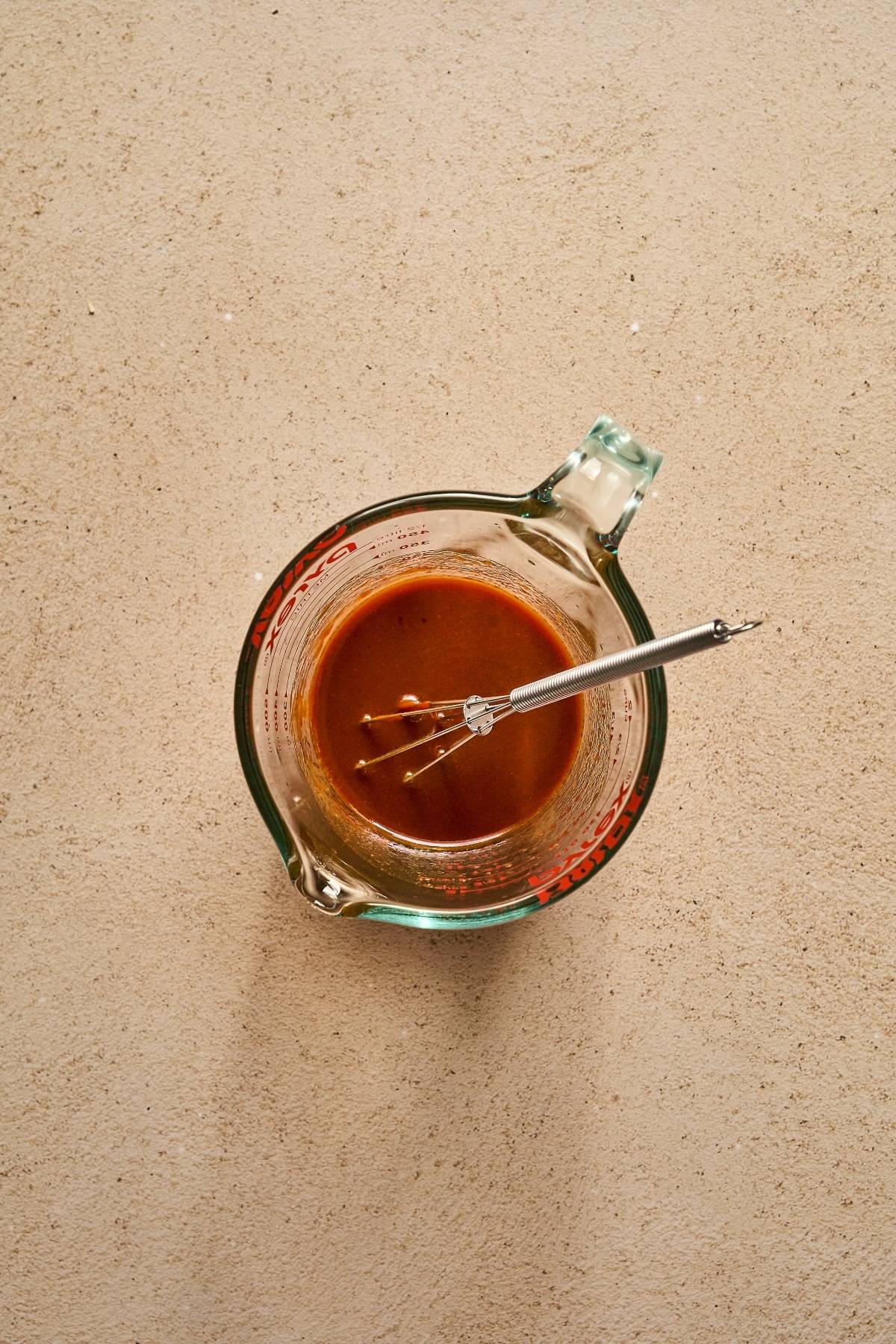
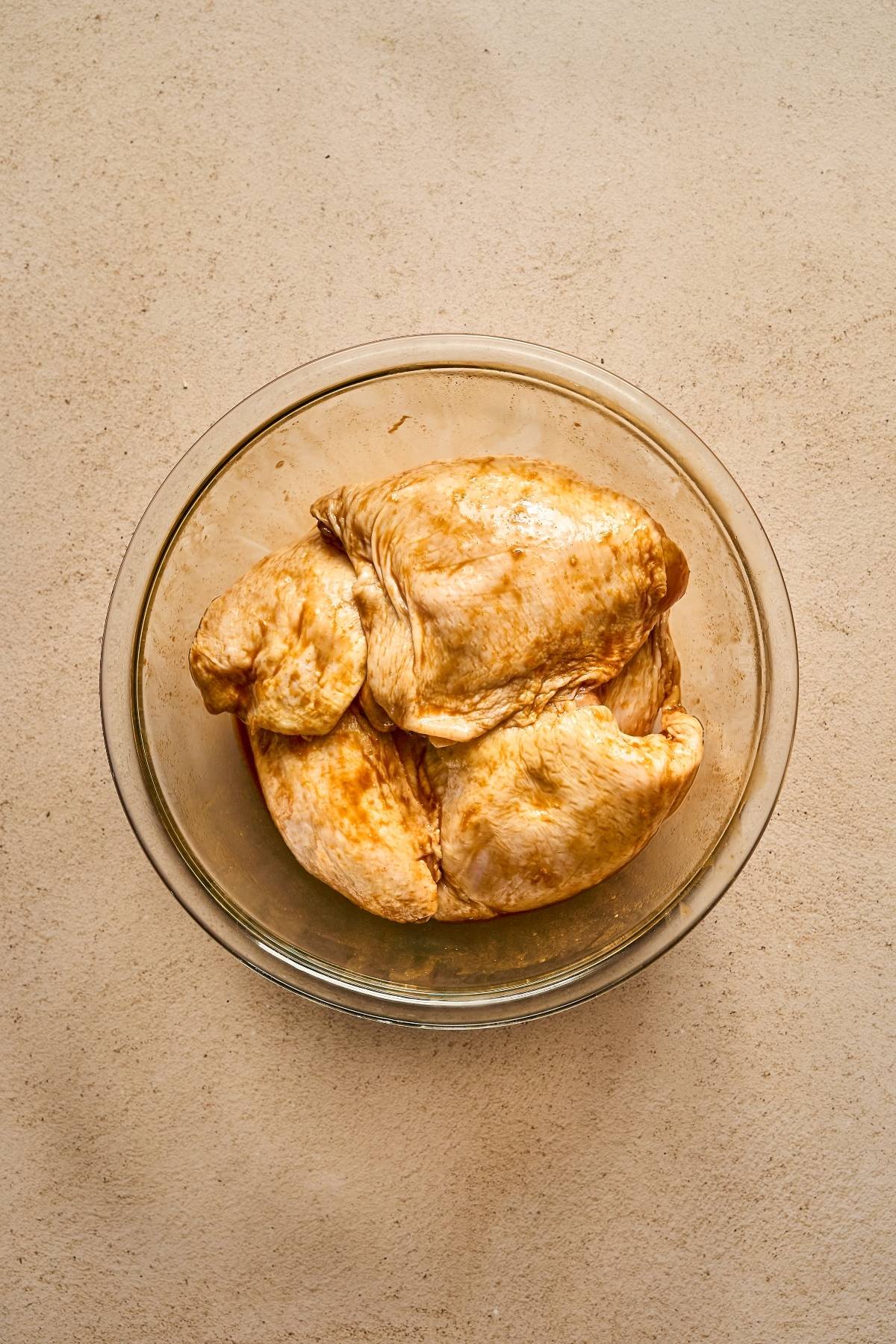
Marinate the chicken: Whisk gochujang, soy sauce, sesame oil and a bit of neutral oil. Toss the chicken in half the mixture and set aside.
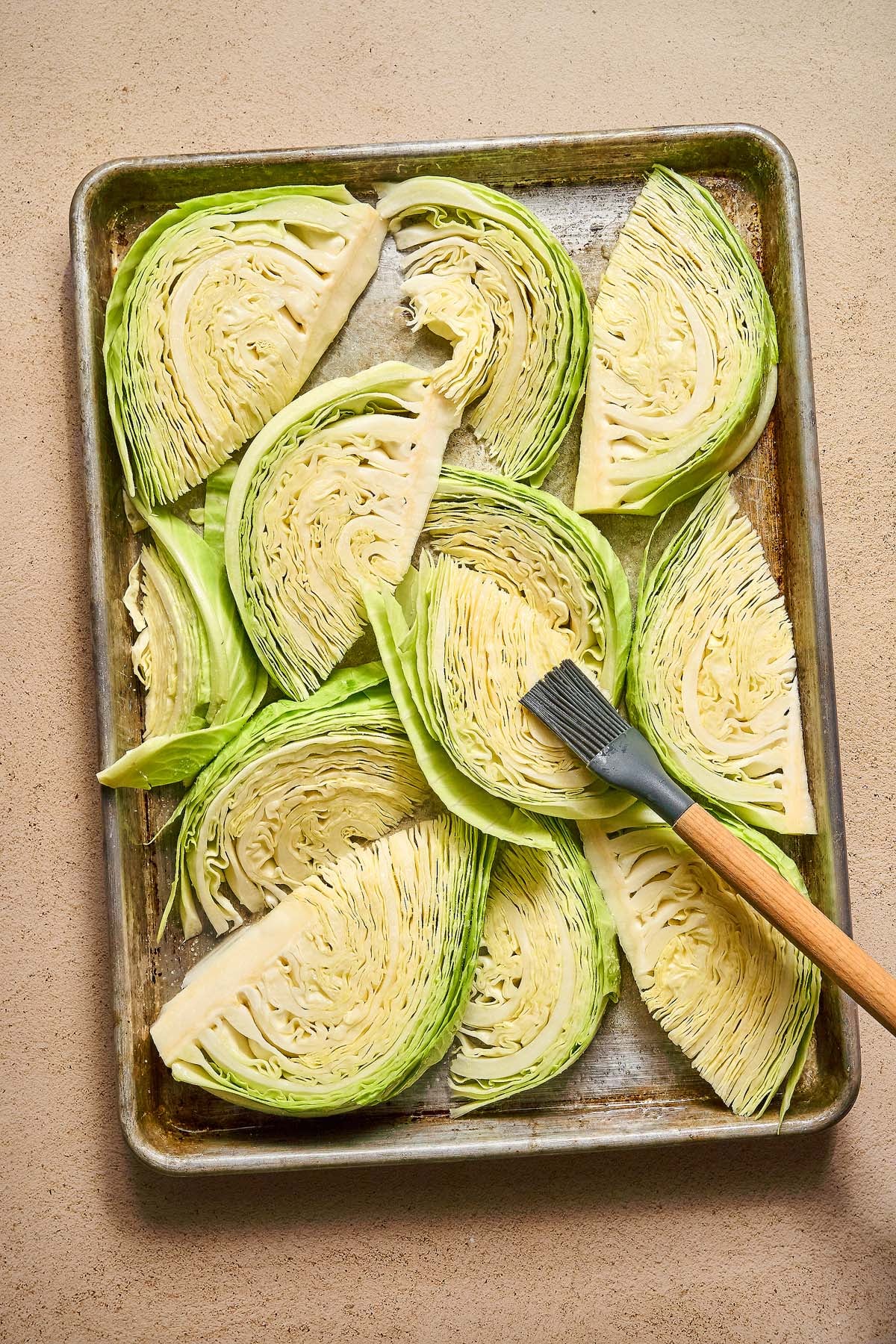
Prepare the cabbage: Cut into wedges, arrange on a greased sheet pan and brush lightly with oil and salt.
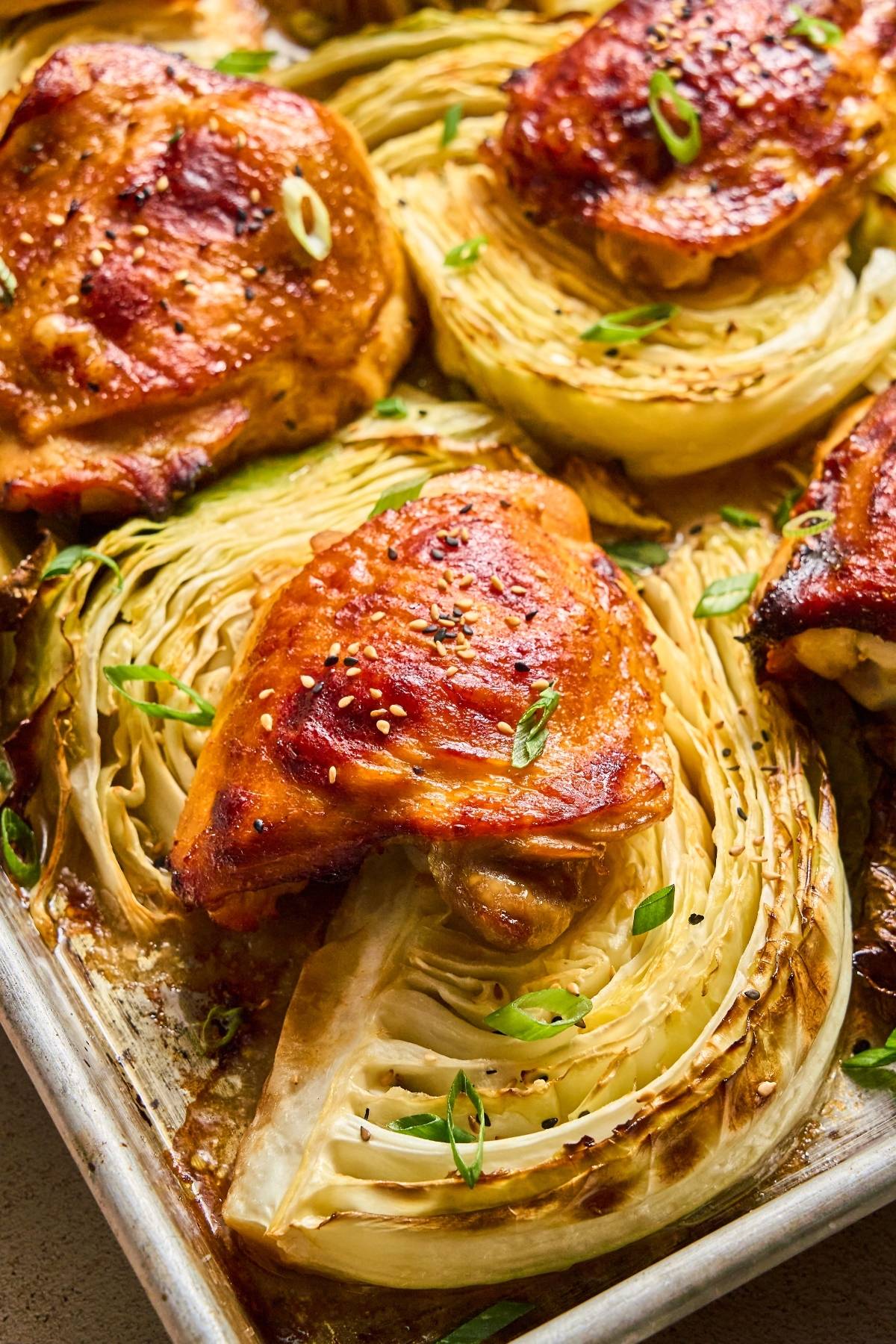
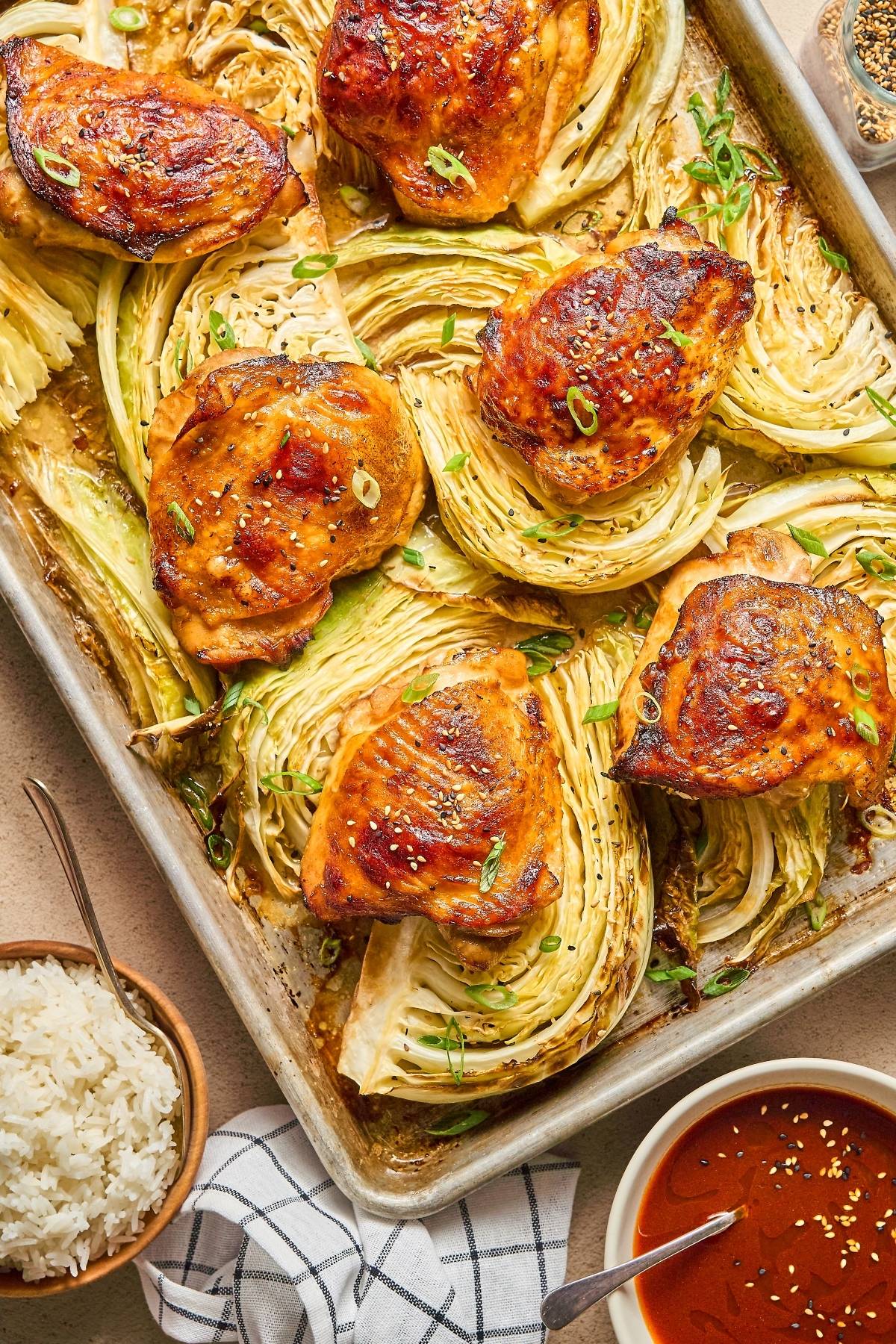
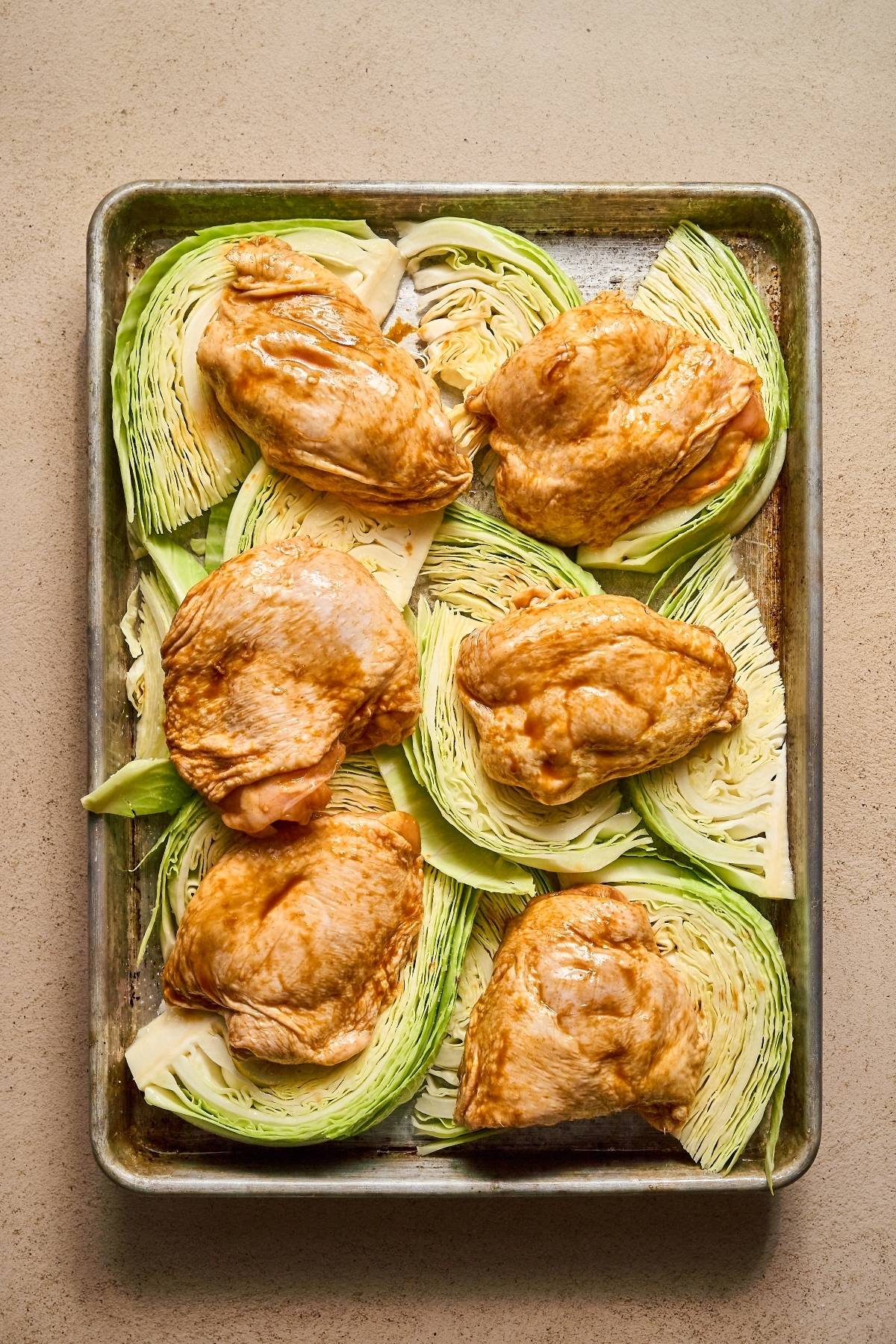
Layer and roast: Place the chicken skin side up over the cabbage so the juices baste the vegetables as they cook. Roast until the chicken is crisp and the cabbage is tender.
Finish the sauce: Stir garlic, honey and rice vinegar into the leftover gochujang mixture.
Serve: Let the chicken rest briefly, then drizzle with the sauce and sprinkle with scallions and sesame seeds if liked.
Substitutions and Variations
Gochujang alternative: Mix 2 tablespoons miso paste, 1 tablespoon chili paste and 1 teaspoon honey together to mimic the flavor balance.
Gluten-free: Tamari is an excellent gluten-free substitute that maintains the same umami balance as soy sauce.
Boneless chicken: If using boneless chicken, reduce the cooking time slightly as boneless chicken cooks faster.
Cabbage: Napa cabbage cooks faster, so start checking for doneness at 20 minutes. Alternatively, swap cabbage for bok choy, Brussels sprouts or carrots.
Sweetener: Maple syrup or brown sugar can be used instead of honey, but honey does give the smoothest texture and most balanced flavor.
Less spicy version: Use half the gochujang or add more honey for a milder version.
No rice vinegar? If you don’t have it, apple cider vinegar works as a substitute with a slightly fruitier note.
No sesame oil? If you don’t have sesame oil, substitute with a neutral oil and a sprinkle of toasted sesame seeds at the end.
Serving Suggestions
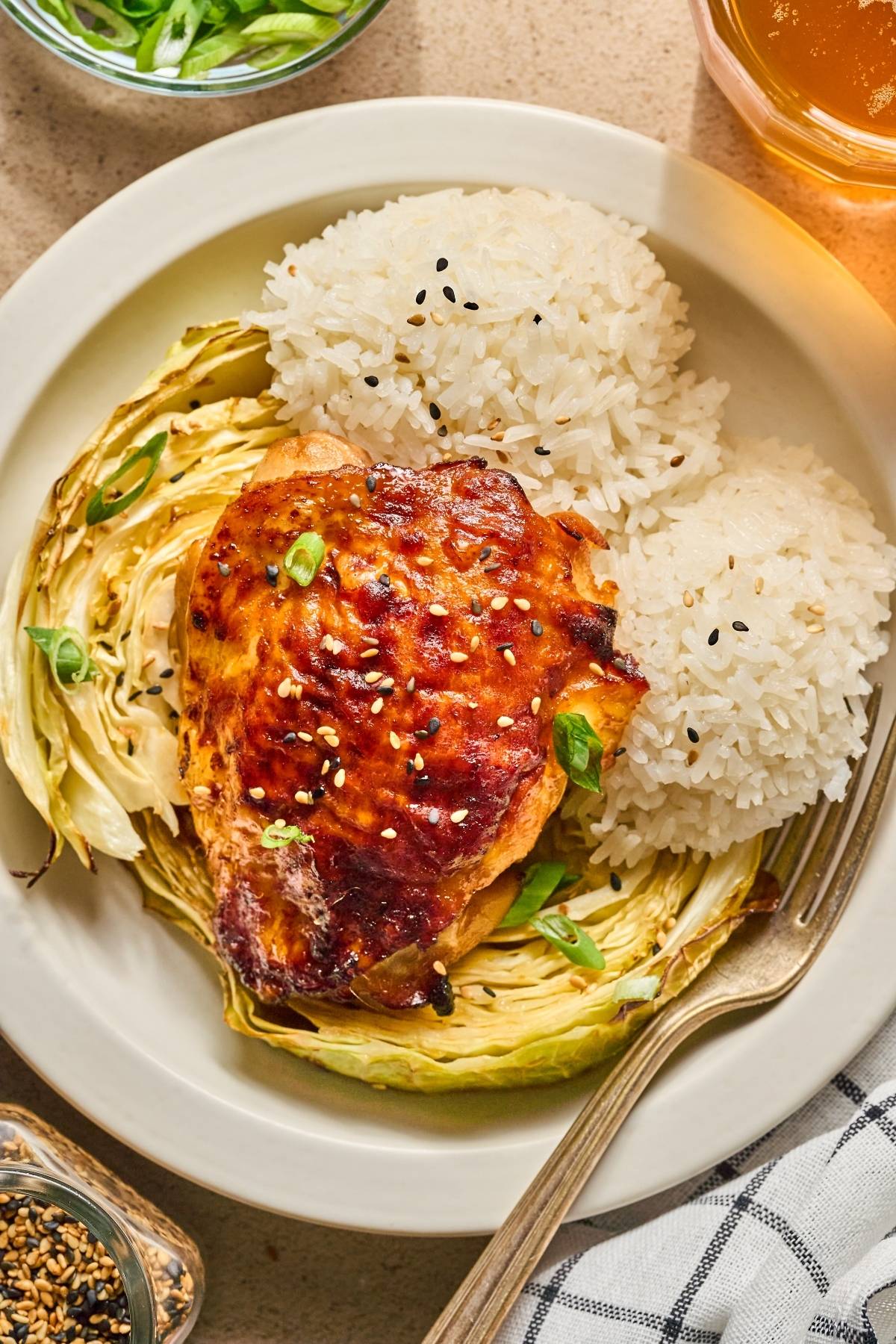
With rice or noodles: Pair your gochujang chicken and roasted cabbage with hibachi fried rice or hibachi noodles. Egg noodles tossed in a little butter and soy sauce would work too, or you might like to try kimchi fried rice to continue the Korean theme. Cauliflower rice is a low carb side dish option.
With pickles: Try quick pickled radishes or pickled carrots with your chicken and roasted vegetables.
Make wraps: Shred and layer leftovers into lettuce wraps with a drizzle of the extra sauce.
Desserts: Finish your Asian meal with a jiggly Japanese cheesecake or dragon fruit ice cream.
How to Store
Store: Keep leftover gochujang chicken with cabbage in an airtight container for up to 3 days.
Freeze: Not recommended, since the cabbage softens too much and the chicken skin loses its crisp texture after thawing.
Reheat: Reheat in a 400°F oven for 10 minutes to restore crispness to the chicken skin.
Top Tips
Use thighs, not breasts: They stay moist and self-baste the vegetables.
Keep the cabbage wedges thick: Slice through the core so they hold together and roast evenly. This structure allows the outer leaves to char while the inner leaves steam and soften.
Don’t overcrowd the pan: Space lets everything brown instead of steam.
Finish the sauce after roasting: Keeps the garlic and honey from burning.
Check doneness: Checking for 175°F with a meat thermometer ensures juicy, perfectly cooked thighs every time.
Sheet Pan Gochujang Chicken Thighs FAQs
Sure, marinating overnight deepens the flavor.
A heavy, uncoated metal half-sheet pan (about 13 x 18 inches) works best. It ensures even heat distribution and allows the chicken to crisp instead of steam while keeping the cabbage in a shallow layer that roasts evenly. Avoid nonstick pans, as their coating prevents proper browning. If you don’t have a half-sheet pan, use 2 smaller pans and rotate halfway through the cooking time.
Gochujang Chicken and Cabbage Recipe
Sheet Pan Gochujang Chicken and Cabbage
Equipment
- Baking Sheet 13 x 18-Inch
- Microplane or Grater
- Pastry Brush Optional
- Meat Thermometer Optional
Ingredients
- 4 Tablespoons cooking oil
- 4 Tablespoons gochujang
- 4 Tablespoons soy sauce
- 2 Teaspoons sesame oil, toasted
- 6 chicken thighs, bone-in and skin-on
- 1 Head green cabbage, small
- 1 Teaspoon sea salt
- 2 Cloves garlic, grated
- 2 Tablespoons honey
- 1 Tablespoon rice vinegar
Optional Garnishes
- scallions, thinly sliced
- sesame seeds, toasted
Instructions
- Preheat the oven to 425°F and grease a large sheet pan with 1 tablespoon neutral oil.
- In a small bowl, whisk together the gochujang, soy sauce, 1 tablespoon neutral oil, and sesame oil.
- Place the chicken thighs in a large bowl and add half of the gochujang mixture.
- Toss to coat and set aside to marinate for 10 minutes or so while you prep the cabbage.
- Cut the cabbage into quarters through the core, then slice each piece into 1-inch thick wedges.
- Arrange the cabbage on the prepared sheet pan and brush with the remaining 2 tablespoons neutral oil.
- Season with salt.
- Place the marinated chicken thighs on top of the cabbage.
- Roast for 10 minutes, then rotate the pan, reduce the oven temperature to 375°F, and continue roasting for 25 to 30 minutes, until the chicken reaches 175°F, the skin is crisp and the cabbage is tender.
- Meanwhile, stir the grated garlic, honey and rice vinegar into the remaining sauce and transfer to a small serving bowl.
- Let the chicken and cabbage rest for 5 minutes before serving.
- Garnish however you like and serve with the tangy gochujang sauce.
Notes
Keep the cabbage wedges thick: Slice through the core so they hold together and roast evenly. This structure allows the outer leaves to char while the inner leaves steam and soften.
Don’t overcrowd the pan: Space lets everything brown instead of steam.
Finish the sauce after roasting: Keeps the garlic and honey from burning.
Check doneness: Checking for 175°F with a meat thermometer ensures juicy, perfectly cooked thighs every time.
Nutrition
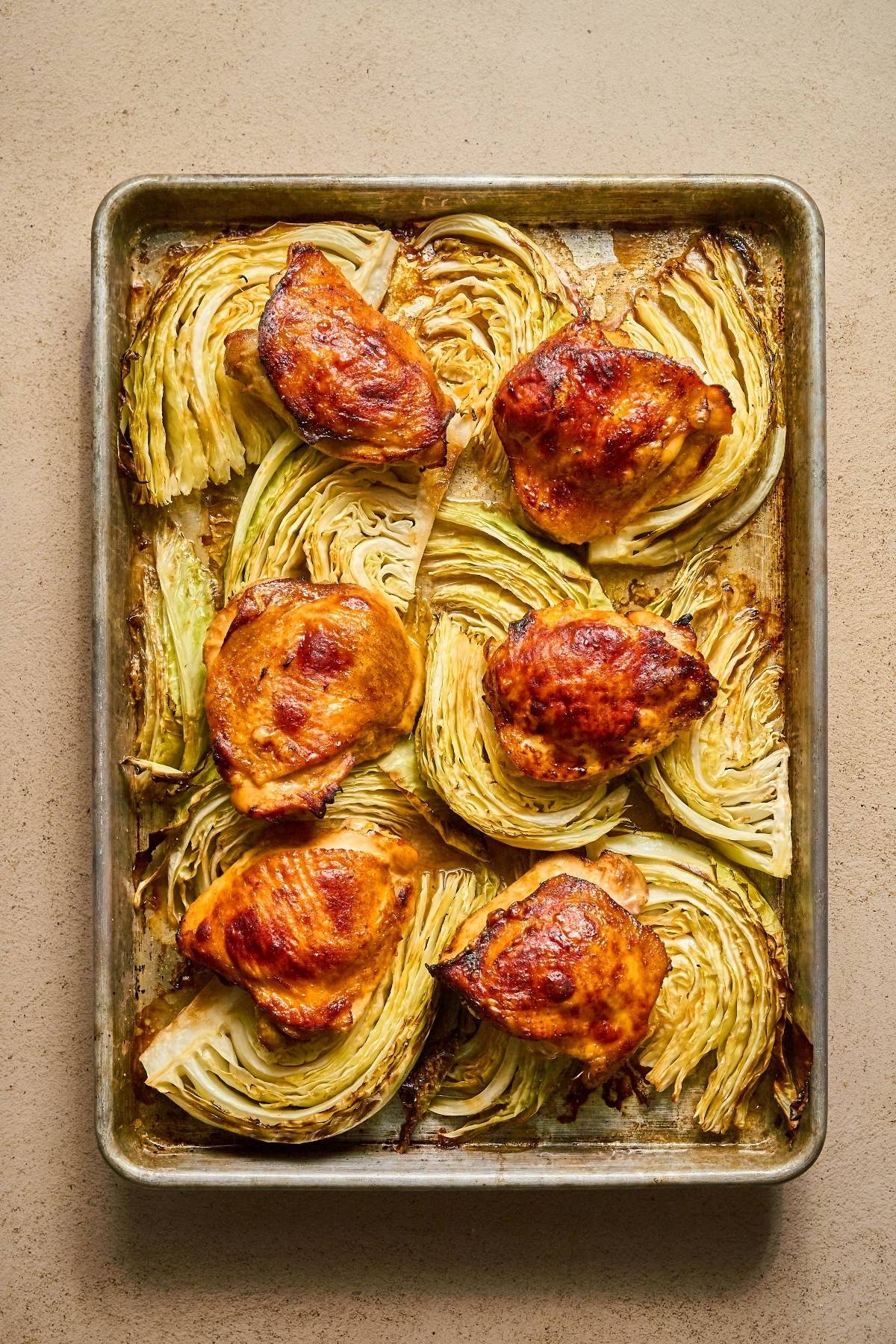
This sheet pan gochujang chicken and cabbage recipe combines the bold, balanced flavors of Korean cooking in a simple one-pan meal. The chicken roasts skin side up on a rimmed baking sheet while the cabbage softens and caramelizes underneath. A sauce made with gochujang paste, soy sauce and sesame oil turns into a deep, glossy glaze that coats every bite. When it comes out of the oven, a drizzle of honey-garlic sauce finishes it off for a flavor-packed homemade dinner.
Other Recipes to Try
Bella Bucchiotti
Bella Bucchiotti is a Canadian-based syndicated food, travel, and lifestyle writer, photographer, and creator at xoxoBella. She founded xoxoBella in 2015, where she shares her love for food, dogs, sustainability, fitness, crafts, outdoor adventures, travel, and philanthropy to encourage others to run the extra mile, try new recipes, visit unfamiliar places, and stand for a cause. Bella creates stress-free and family-friendly recipes for weeknight dinners and festive feasts.